Doping: Peres Jepchirchir suspended for three years, Ronald Korir for six, Kenyan athletics under pressure
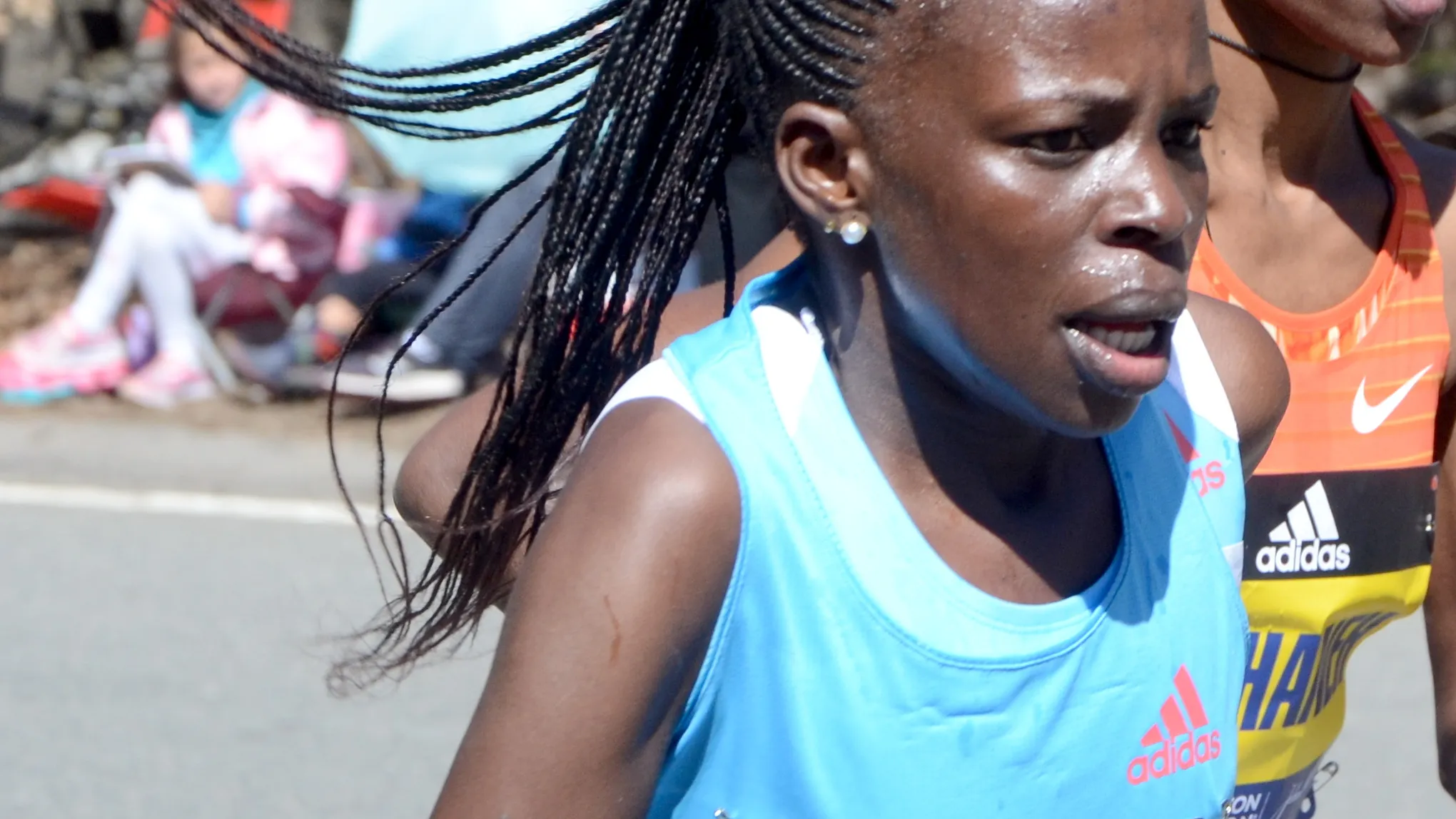
Olympic and world marathon champion Peres Jepchirchir has been suspended for three years for EPO doping. The Athletics Integrity Unit (AIU), the independent disciplinary body of World Athletics, made the decision public on November 19, 2026, alongside two other sanctions against Kenyan athletes, report CSport and Œil d'Afrique.
Three cases, one country
Jepchirchir, 33, was tested out-of-competition on July 17, 2026, in Kapsabet: one blood sample and four urine samples were collected. The Cologne laboratory reported an abnormal result for erythropoietin in the blood on September 17, and subsequently in two urine samples on October 8 and 13. Provisionally suspended on October 20, 2026, she signed the admission of guilt form on October 27, after having denied any use of EPO during her interview, specifies Œil d'Afrique. The four-year sanction was reduced to three: from October 20, 2026, to October 19, 2029.
All her results since July 17, 2026, are disqualified, including her victory at the Sydney Marathon, which is now awarded to her compatriot Irine Cheptai, who finished second in 2:22:11. However, her major titles are retained: the 2021 Olympic gold, the 2025 world title, New York 2021, Boston 2022, and London 2024, where she ran in 2:16:16.
Veronica Loleo, silver medalist in the half-marathon at the 2026 World Road Running Championships, also received a three-year ban after EPO was detected out-of-competition on September 6, 2026. She loses her world medal and claims to have received an injection for an injury, without being able to identify the product, according to CSport.
The heaviest sanction was handed to Ronald Korir, 35, who finished fourth at the 2023 Berlin Marathon: six years, based on his biological passport. Twenty blood samples taken between May 6, 2023, and August 18, 2025, led a panel of experts to unanimously conclude that doping was likely, details CSport. His results have been disqualified since January 19, 2024.
Nairobi 2029 in the background
These decisions come at the worst possible time for Kenya, a country that has produced more long-distance champions than any other, and to which the World Athletics Council awarded the 2029 World Championships on September 15, 2026, to be held at the Kasarani Stadium in Nairobi, notes Œil d'Afrique. A few months earlier, Ruth Chepng'etich had already been suspended for three years.
The CEO of the AIU, Brett Clothier, acknowledges that the Kenyan authorities have made significant progress, while warning that "there is still a long way to go." He says he expects Nairobi to strengthen the national anti-doping agency, ADAK, and take action against the networks that supply the products.
This is where the real challenge lies for the continent. Behind every sanctioned athlete, there is often an intermediary, a coach, or a supplier who is never tested, and runners from modest families who are promised a career. Demanding accountability from the Kenyan system is one thing, and it is necessary. Allowing East African distance running to be reduced to a matter of cheating would be another: the vast majority of Kenyan athletes have never tested positive, and their performances belong to them.
This article was written in French with the help of artificial intelligence from the sources cited below, then translated from French automatically. Read the original.