November 26, 1965: France becomes a space power from the Algerian Sahara, three years after independence
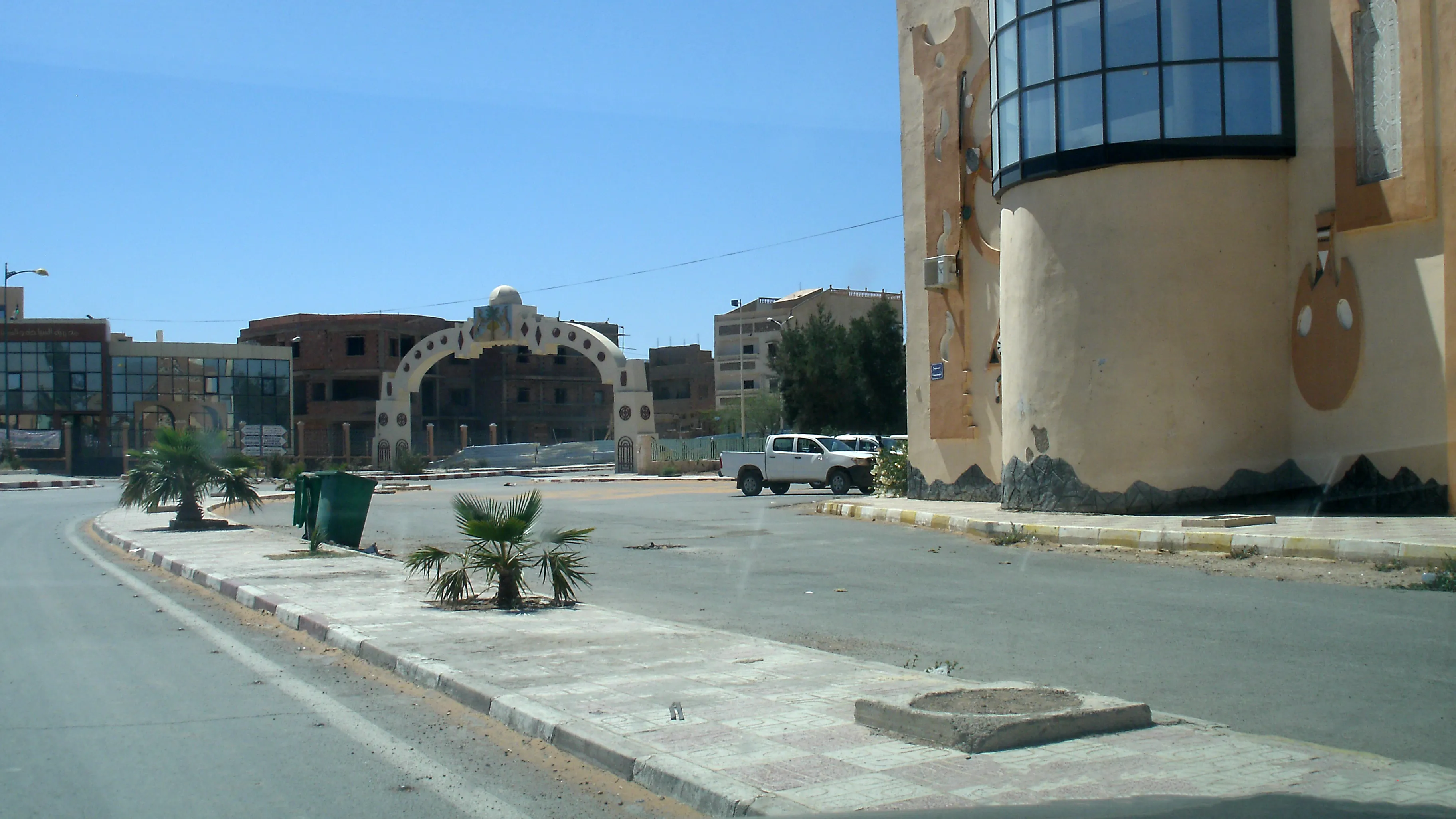
On November 26, 1965, at 3:47 p.m. Paris time, a Diamant A rocket took off from the Hammaguir launch site in the Algerian Sahara and placed the A-1 satellite, soon renamed Astérix, into orbit. According to CNES, France became the third power in the world capable of launching a craft on its own, after the Soviet Union and the United States. It did so from African soil, three and a half years after Algerian independence.
The craft weighed about forty kilograms and carried no scientific experiments: its code name, A-1, simply stood for "army." Upon the separation of the fairing, its antennas were damaged and the transmitter remained silent; it was an American radar that confirmed the orbit, according to Wikipedia. With a perigee of 527 kilometers, Astérix is still orbiting above our heads and will not fall back down for several centuries.
An Algerian base that remained French
Hammaguir is not an interchangeable setting: it is a locality in the commune of Abadla, 120 kilometers southwest of Béchar, where the French army established its Inter-service Special Weapons Testing Center in 1947 or 1948, depending on the source. More than 271 rockets were launched from there, including the one that carried Félicette, the first cat in space, on October 18, 1963.
Algeria had been independent since July 1962, but the base remained at the disposal of Paris. Annexes to the Évian Accords of March 18, 1962, which were kept secret for a long time, granted France five additional years at Hammaguir, Colomb-Béchar, and its Saharan nuclear test sites—and twenty years at the B2-Namous chemical testing base. Hammaguir was not evacuated until 1967.
The desert as a firing range
For the Sahara was not used only for space. France conducted 17 nuclear tests there: four atmospheric shots at Reggane, starting with Gerboise Bleue, 70 kilotons at the top of a 100-meter tower on February 13, 1960, followed by thirteen underground shots at In Ekker until February 1966. The vast majority therefore took place after independence.
On May 1, 1962, the Béryl test went wrong: a radioactive cloud escaped from the In Ekker test gallery. Several sites were not decontaminated by either the French army or the Algerian state, and it was not until 2006 that they were closed to the public. Jean-Marie Collin, of ICAN France, describes vitrified sand, poorly fenced enclosures, and residents collecting metal there; a French Senate report he cites acknowledges that no precise data exists on the waste buried in the Sahara.
Key takeaways
The French space program was born in Africa, on a base that independent Algeria did not control. Sixty-one years later, Astérix is still in orbit, and the Sahara is still awaiting its decontamination and an inventory of what is buried there.
This article was written in French with the help of artificial intelligence from the sources cited below, then translated from French automatically. Read the original.
Sources
- CNES — Il y a 50 ans, Diamant lançait Astérix, premier satellite français
- Wikipédia — Astérix (satellite)
- Wikipédia — Hammaguir
- Wikipedia — Hammaguir (lancements depuis la base)
- Wikipédia — Essais nucléaires français
- Wikipédia — Gerboise bleue
- Jean-Marie Collin (ICAN France), « Sous le sable, la radioactivité des essais », L'Humanité