November 28, 1960: Mauritania proclaims its independence, a country its neighbors refused to recognize
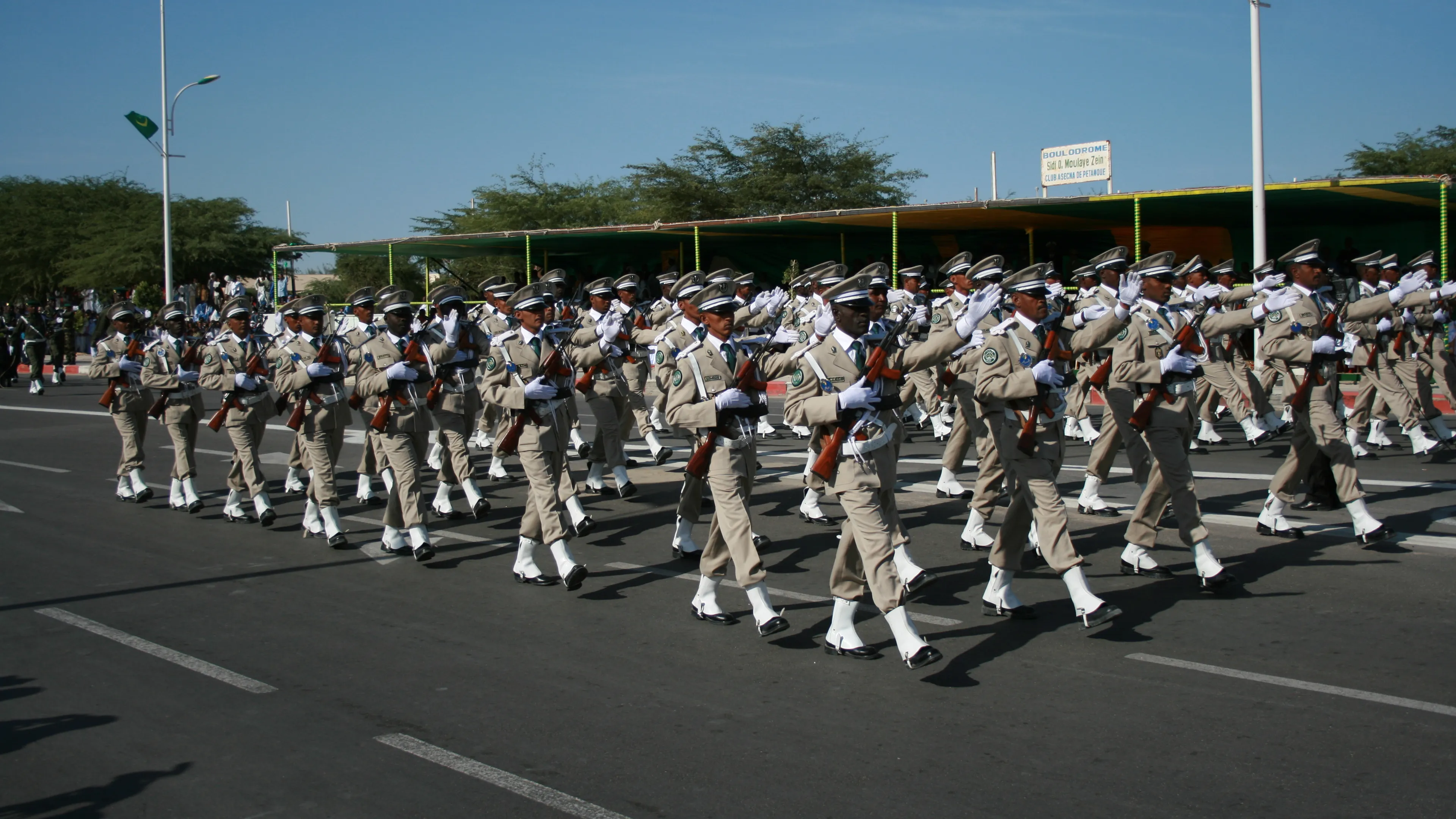
On November 28, 1960, the Islamic Republic of Mauritania was declared an independent state, according to Encyclopædia Britannica. At its head was Moktar Ould Daddah, a jurist who had led the territory's first autonomous government since May 1957 and who would become the country's first president, confirmed by the election of August 1961.
The path had been short and negotiated. According to Encyclopædia Universalis, Mauritania, long administered within the orbit of Senegal, voted in the referendum of September 28, 1958, to remain in the French Community: Ould Daddah's party won by a wide margin, then swept all seats in the June 1959 legislative elections. The Islamic Republic itself had been proclaimed as early as October 1958.
A capital rising from the dunes
The most telling symbol of this independence is one name: Nouakchott. Work began in March 1958 on an almost empty site to accommodate 15,000 inhabitants. The 1961 census counted 5,807; the 2023 census counted 1,446,761. An administrative post planted in the sand has become a metropolis.
A state that others refused to see exist
For independence was not enough: it had to be recognized. Morocco, in the name of the "Greater Morocco" theory, considered the Mauritanian territory as its own. Universalis recalls that with the support of the Arab League and the Casablanca Group, Rabat opposed Mauritania's accession to the United Nations in December 1960. Wikipedia notes that most Arab League states, the Soviet Union, and several so-called progressive African states supported this position at the time.
It would take until October 27, 1961, for Mauritania to take its seat at the UN, and 1969 for King Hassan II to recognize its independence, nine years after France, according to Britannica, which also mentions the temporary occupation of parts of the territory during the 1960s. An African country therefore had to fight not for its land, but for its name on a map.
The situation was not glorious, however: the Royal Museum for Central Africa highlights that it was French and Spanish support that prevented the Moroccan annexation attempt. The sovereignty of the young state also depended on the rivalry of its former masters.
What Mauritania did with its sovereignty
In 1974, Nouakchott joined the Arab League, the very organization that had contested its existence. Then, in 1976, Mauritania partitioned Western Sahara with Morocco, according to Britannica: the state that had claimed the right to exist was, in turn, denying that right to another people. On July 10, 1978, a military coup d'état ousted Moktar Ould Daddah.
Key takeaways
Mauritania became independent on November 28, 1960, but did not obtain its seat at the UN until October 27, 1961, and only received recognition from Morocco in 1969: an independence snatched twice, first from colonization and then from the gaze of its neighbors.
This article was written in French with the help of artificial intelligence from the sources cited below, then translated from French automatically. Read the original.