Ebola in Kenya: 28 contacts and 27 flight occupants sought, no vaccine for the Bundibugyo strain
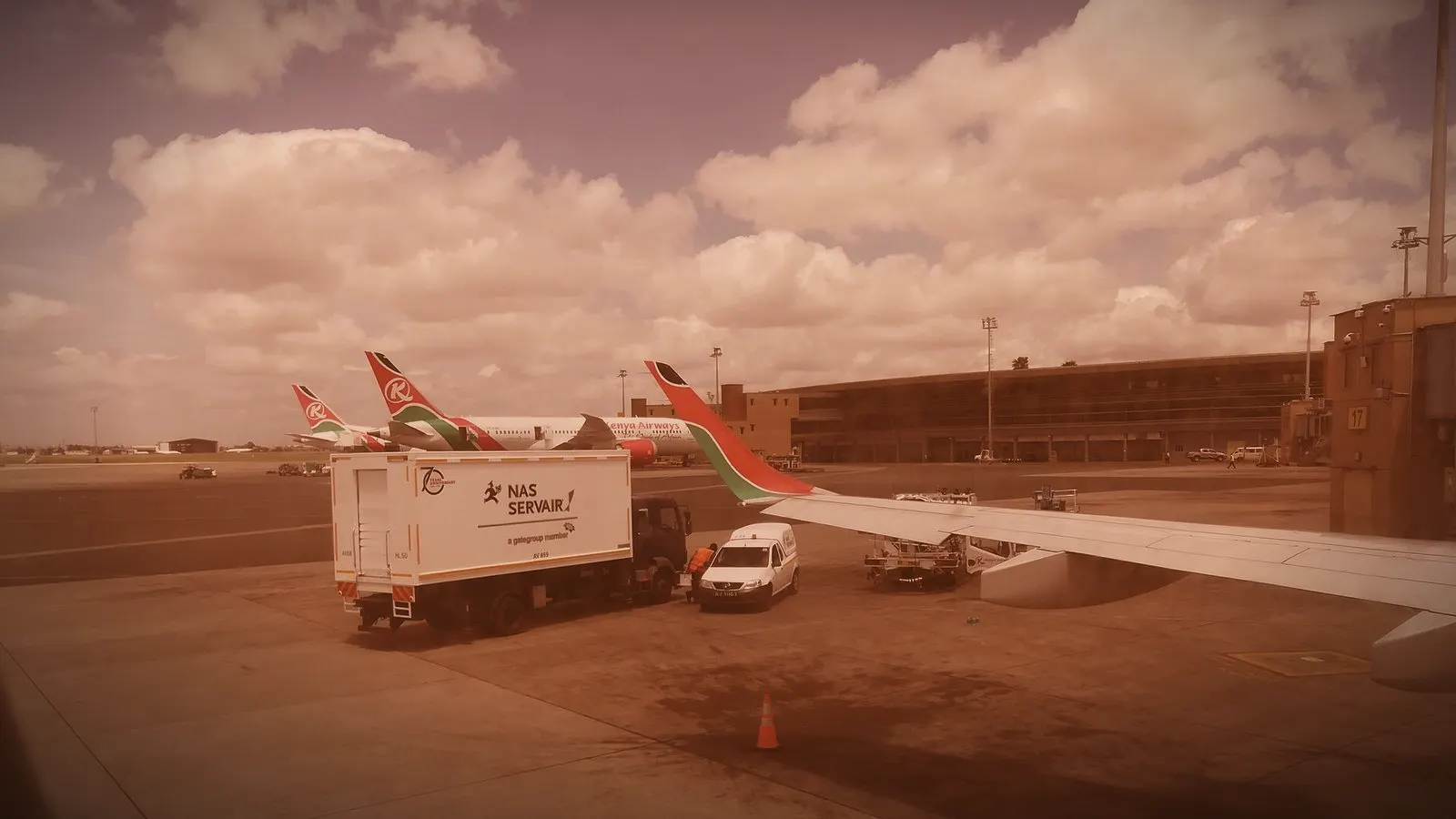
Kenya is searching for people who were in contact with its first Ebola patient, who died in Nairobi. This Kenyan, who had lived for several years in the Democratic Republic of Congo, fell ill in the east of the neighboring country before traveling to the Kenyan capital: the route from Beni to Kampala on October 2, 2026, then a flight the following day, according to Al Jazeera. Capital FM places his death on October 6, during his treatment in Nairobi, where tests confirmed the Bundibugyo strain of the Ebola virus disease.
28 contacts, 23 passengers and four crew members
Authorities have identified 28 possible contacts, including relatives and healthcare workers, and are searching for 23 passengers and four crew members from the flight taken by the patient, reports Al Jazeera: the Jambojet JM8523 on Saturday, October 3, specifies Capital FM. The Ugandan Ministry of Health indicates that the traveler had a "normal" temperature during the check at Entebbe airport; Kenyan authorities believe he may have taken medication to mask his symptoms.
False alarm in Wajir
In Wajir County, in the northeast, a patient hospitalized in Habaswein sparked fears of a second case. The National Public Health Virology Laboratory in Nairobi ruled out Ebola: the man is suffering from malaria and was treated on the evening of October 8, announced Health Minister Aden Duale. Governor Ahmed Abdullahi called on residents to remain calm. On October 7, the minister had assured that the country was not experiencing a widespread epidemic.
An African strain without a vaccine
The Bundibugyo strain was first detected in Uganda in 2007, according to the World Health Organization, and symptoms appear 2 to 21 days after contamination. Crucially, no vaccine protects against it: the available vaccine targets the Zaire strain, the one from the 2014-2016 West Africa epidemic. Nineteen years after its identification, the variant circulating in the Great Lakes region remains without a vaccine response, and the response relies solely on the continent's health systems.
The Kenyan case extends the epidemic declared in May in the DRC, which started in Ituri and is now present in seven provinces: at least 4,148 deaths for 8,300 reported cases, according to Al Jazeera. Doctors Without Borders describes an "alarming" rise in North Kivu, where 40% of new cases are concentrated. Uganda, which had recorded about twenty cases, had declared itself Ebola-free in July 2026.
The WHO has delivered approximately 1,000 tests and 1,000 protection kits to the most exposed Kenyan counties, and screening is being maintained at points of entry. Contact monitoring runs for twenty-one days: it is by then that Kenya will know if the chain of transmission has been broken in time.
This article was written in French with the help of artificial intelligence from the sources cited below, then translated from French automatically. Read the original.