ECOWAS-AES: First ministerial face-to-face in Dakar, working groups for a framework agreement
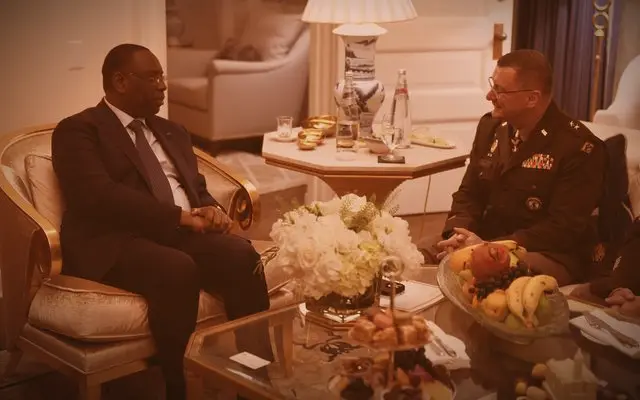
ECOWAS and the Alliance of Sahel States (AES) decided on October 17, 2026, in Dakar to create joint thematic working groups tasked with preparing a cooperation framework agreement, following their first formal ministerial face-to-face meeting. The results of this technical work will be submitted to the ministers before their next session, the date and location of which will be set through diplomatic channels, reports the Senegalese Press Agency (APS).
The ECOWAS delegation was led by Cheikh Niang, Senegalese Minister of African Integration and Foreign Affairs and President of the organization's Council of Ministers. The AES delegation was led by Karamoko Jean-Marie Traoré, Burkinabe Minister of Foreign Affairs and President of the Confederation's ministerial steering committee, who read the joint communiqué.
Two projects on the table
According to the APA agency, ECOWAS arrived with a project covering eighteen priority areas divided into five clusters, including the free movement of people and goods, trade, security, and cross-border cooperation. The AES, for its part, defined a common position in Ouagadougou based on respect for the sovereignty of its member states, recognition of its confederal framework, and the preservation of regional integration achievements.
Both parties say they want a "balanced, realistic" framework and relations based on good neighborliness, respect for sovereignty, and the dignity of the populations, according to the joint communiqué cited by the APS. The discussions took place in a "spirit of fraternity, mutual respect, and openness." However, APA emphasizes that the final communiqué "does not mention any final agreement."
What is at stake for the populations
The withdrawal of Mali, Burkina Faso, and Niger from ECOWAS has been effective since January 29, 2025, and the AES was established as a Confederation in July 2024. Since then, the legal and institutional definition of relations between the three Sahelian countries and their neighbors remains open. Behind the diplomatic vocabulary, the stakes are concrete: the freedom to come and go, to trade, to work, and to seek medical care for a relative on the other side of a border that West African families have never treated as a barrier.
The Dakar meeting follows the consultations held on May 22, 2025, in Bamako. It does not resolve anything, but it reopens a technical channel between two entities that, for months, have mainly spoken to each other through communiqués. What happens next will depend on what the working groups report back to the ministers.
This article was written in French with the help of artificial intelligence from the sources cited below, then translated from French automatically. Read the original.