MRI: Nigerian Mary-Brenda Akoda announces software for 2027 that reduces exam time by up to 90%
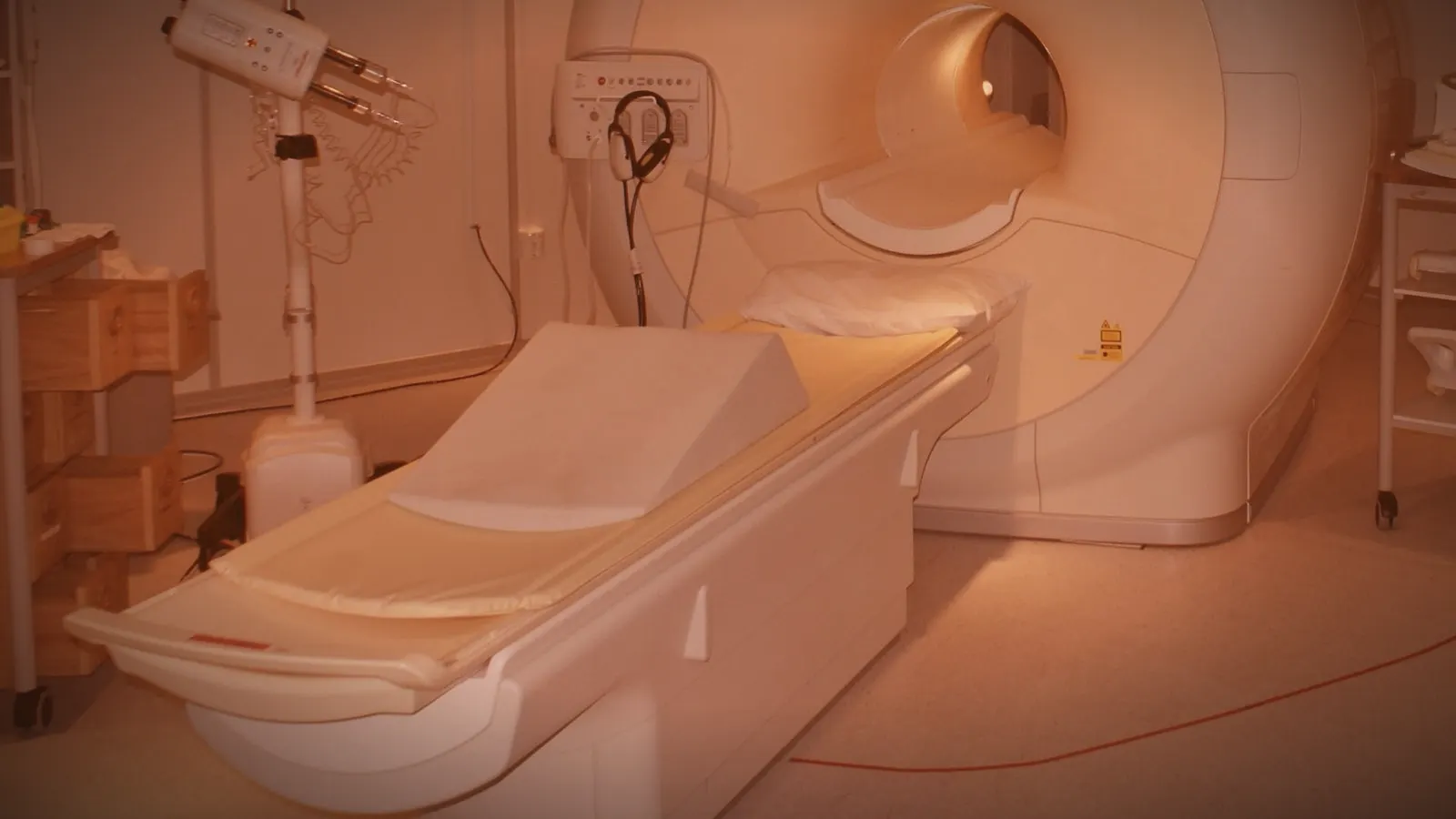
Nigerian researcher Mary-Brenda Akoda, based in the United Kingdom, announced on October 14, 2026, the deployment in Nigeria and the United Kingdom, in the second half of 2027, of GenMRI, an artificial intelligence software that reportedly reduces the duration of an MRI exam by up to 90% on devices already in service, reports the Nigerian daily This Day.
In practical terms, according to the figures she provided, a twenty-minute exam would drop to about two minutes, and a one-hour exam to six minutes. The software does not require the purchase of any new machines: it works on image reconstruction.
Goldsmiths, Imperial College, Microsoft
Founder of the company GenScan AI, she holds a degree in computer science from Goldsmiths (University of London) and a Master of Research in artificial intelligence obtained with distinction from Imperial College London, where she was a Google DeepMind scholar. She has worked as a software engineer and researcher at Microsoft, notably in Cambridge, according to Nairametrics.
On September 8, 2026, she won the NLNG Prize for Science and Innovation, which carries a $100,000 award and is presented by Nigeria LNG. The jury, chaired by former Minister of Communications Omobola Johnson, chose her from a record 237 entries, after the 2025 edition had named no winner. She is the first woman and the first millennial to win this prize as an individual, notes Nairametrics.
What is demonstrated, and what is not
The results put forward are those of the researcher. GenMRI was built and validated on more than 8,800 MRI images; a technical evaluation reports a similarity reaching 99.7% with conventional images, for an acceleration of four to ten times.
At the Buckinghamshire Healthcare NHS Trust, a radiologist compared images without knowing which ones came from the software: according to Mary-Brenda Akoda, he judged them to be "diagnostically equivalent" to conventional MRIs in all cases examined. This Day does not mention any peer-reviewed publication or regulatory approval at this stage.
A matter of access, not prestige
The interest for the continent lies elsewhere than in technical performance. African health systems have very few MRI machines, and each machine is a bottleneck: multiplying the number of patients processed in an existing scanner is, in practice, worth several purchased scanners. The prize jury accepted this reasoning, believing that the innovation could reduce waiting times in resource-constrained systems like Nigeria's.
"Every second counts," summarizes the researcher, as quoted by This Day, while pointing out that the speed of diagnosis often determines the outcome of a stroke or cancer. Trained in London, employed by Microsoft, and awarded in Lagos, she has chosen to launch her product simultaneously in her host country and her home country. This is the scenario that the African diaspora has long been calling for: not necessarily returning, but no longer having to choose.
This article was written in French with the help of artificial intelligence from the sources cited below, then translated from French automatically. Read the original.