November 26, 1922: Tutankhamun opened, and Egypt keeps its entire treasure for the first time
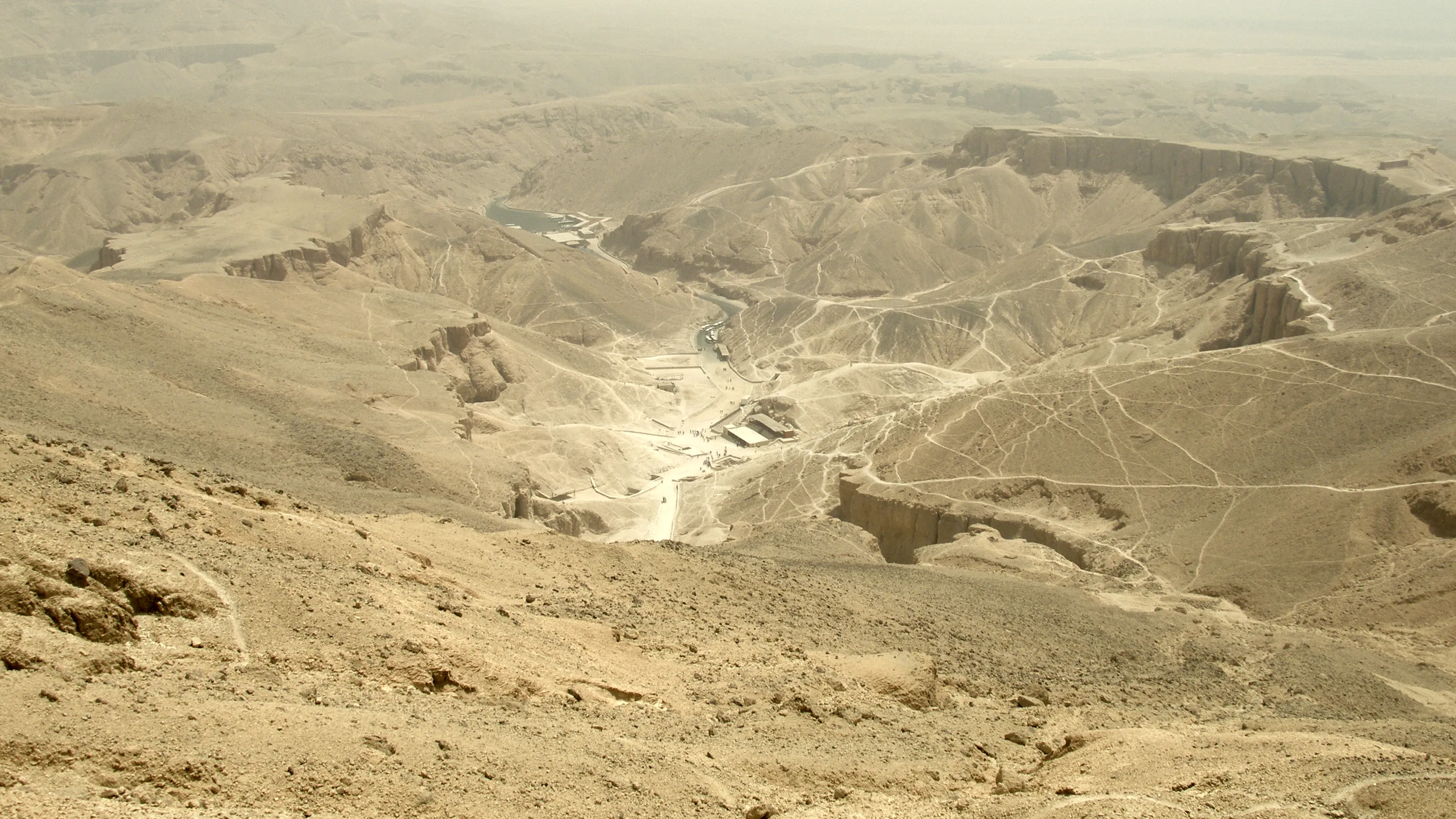
On November 26, 1922, in the Valley of the Kings near Luxor, British archaeologist Howard Carter pierced a hole in the second sealed door of a tomb that had been closed for more than three thousand years. Standing behind him were his patron, Lord Carnarvon, and his daughter, Lady Evelyn Herbert. Carnarvon asked him if he could see anything. In the most well-known version, from his book, Carter replied, "wonderful things"; Wikipedia notes that accounts differ on the exact wording. The tomb was that of Tutankhamun, KV62.
The names no one wrote down
The staircase had been unearthed three weeks earlier: on November 4, 1922, an Egyptian worker cleared a step carved into the rock. Which one? Sources do not agree. The French Wikipedia names Hussein Abdel-Rassoul, a water carrier of about twelve years old; the English page points out that Carter never names him in his memoirs. Egyptologist Zahi Hawass identified him in 2018.
The project was Egyptian in labor, British in signature. Four foremen are named: Ahmed Gerigar, Gad Hassan, Hussein Abu Awad, and Hussein Ahmed Said; the first two worked nine seasons with Carter, according to AFP. The porters have no recorded names. In photographs of the site, historian Christina Riggs notes, foreigners are identified, while Egyptians are almost never.
The treasure that did not leave Egypt
Until then, the custom was for the patron of an excavation to take half of the findings, by virtue of the law of June 12, 1912. Pierre Lacau, director of the Antiquities Service and now accountable to an Egyptian minister, imposed a different rule: a tomb found intact remains entirely with Egypt. A circular dated October 16, 1922, announced this to foreign missions, a few months after the proclamation of independence.
The rule held. Nothing was divided: the furniture went to the Egyptian Museum in Cairo, where about 1,700 pieces are on display. There are more than 5,000 objects, 5,398 according to Le Monde as cited by Wikipedia, including a solid gold coffin representing 110.4 kg of pure gold. The burial chamber was opened on February 16, 1923, and the last objects were transported to Cairo in 1932.
The standoff was tough: in early 1924, Carter suspended the work to protest against Egyptian control of access, and in 1930, Carnarvon's heirs obtained 36,000 pounds sterling in compensation. Both men had nevertheless taken objects that were donated to foreign museums or private collections, according to Wikipedia. Elsewhere, the battle continues: Zahi Hawass is demanding the Rosetta Stone and the bust of Nefertiti.
Key takeaways
November 26, 1922, is not only the most famous of archaeological discoveries: it is the first time that a treasure of this magnitude remained on the African soil that gave it birth. As for the names of the workers who unearthed it, they were never given.
This article was written in French with the help of artificial intelligence from the sources cited below, then translated from French automatically. Read the original.