October 3, 1935: 200,000 Italian soldiers invade Ethiopia
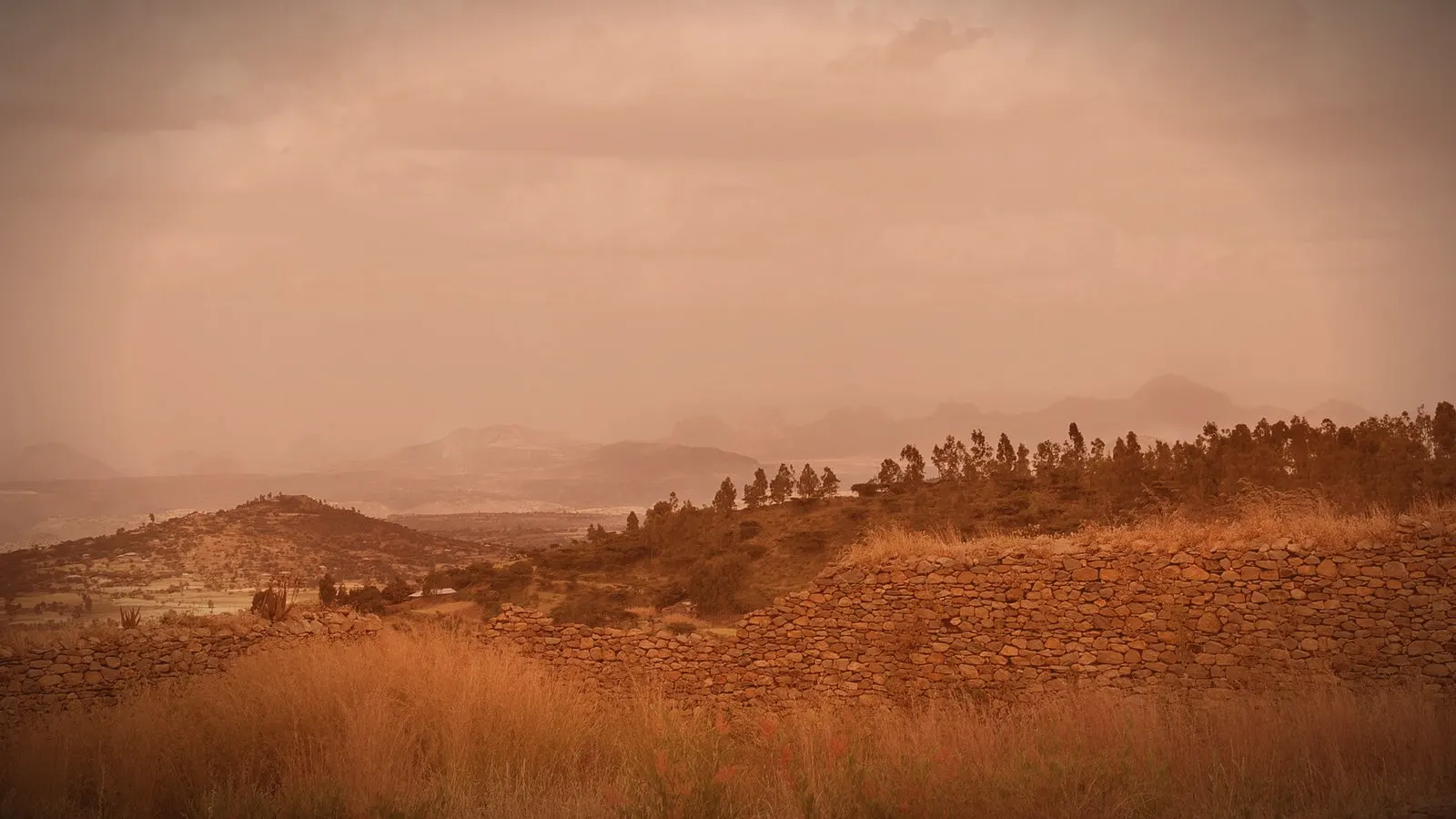
At dawn on October 3, 1935, approximately 200,000 Italian soldiers crossed the Mareb River from colonial Eritrea and entered Ethiopia under the command of General Emilio De Bono. A second column, led by Rodolfo Graziani, attacked from Italian Somaliland. Benito Mussolini wanted to erase the humiliation of Adwa, where Ethiopia had crushed the Italian army in 1896, and seize what was then, according to the Encyclopædia Universalis, "one of the few independent states" on the continent.
Gas against villages and herds
The invasion followed a carefully orchestrated border incident, the same encyclopedia notes, and was carried out with the help of chemistry: Mussolini authorized the use of mustard gas on December 28, 1935, and the Italian air force dropped 330 tons of it over four months, in violation of the 1925 Geneva Protocol, targeting civilian water sources as well.
Before the League of Nations in Geneva on June 30, 1936, Emperor Haile Selassie described in Amharic how aircraft equipped with sprayers spread "a fine and deadly rain" over soldiers, women, children, and pastures.
A League of Nations that looked the other way
Fifty states had nevertheless voted for sanctions against Italy on November 18, 1935. They remained a dead letter: neither oil, coal, nor steel were targeted, and London left the Suez Canal open to Italian ships. Addis Ababa fell on May 5, 1936, and Mussolini proclaimed the annexation on May 9. On June 30, the Emperor's motion rejecting the conquest was rejected by 23 votes to 1; the sanctions were lifted on July 4.
The shock that awakened Pan-Africanism
For Africa and the diaspora, the aggression was experienced as a racial war against the last great sovereign African state. Demonstrations erupted in Harlem, Cape Town, London, Kingston, and Nairobi; dockers refused to load Italian ships, and funds were collected for medical aid, a Cambridge University Press study recalls. In 1935, the International African Friends of Abyssinia was born in London, chaired by C. L. R. James, with Jomo Kenyatta as honorary secretary and Amy Ashwood Garvey as treasurer; George Padmore and Ras Makonnen joined them. This network would lead to the International African Service Bureau.
Ethiopia, for its part, never capitulated. The Arbegnoch, or "patriots," harassed the occupier for five years under leaders like Abebe Aregai or Belay Zeleke, despite massive reprisals: the Addis Ababa massacre of February 19, 1937, is estimated to have caused between 1,400 and 19,000 deaths, or 30,000 according to Ethiopian sources. The total death toll remains disputed: Ethiopia claimed 760,300 deaths in 1946, a figure that historian Angelo Del Boca considers inflated, while others describe the war as genocidal. The capital was recaptured on April 6, 1941.
Key takeaways
On October 3, 1935, Ethiopia was invaded because it was free. Its resistance, as much as the indifference of the great powers, convinced a generation of African activists that they would owe their liberation only to themselves.
This article was written in French with the help of artificial intelligence from the sources cited below, then translated from French automatically. Read the original.
Sources
- Second Italo-Ethiopian War — Wikipedia
- Conquête de l'Éthiopie par l'Italie — Encyclopædia Universalis
- Haile Selassie's speech to the League of Nations (1936) — Wikipedia
- International African Friends of Abyssinia — Wikipedia
- The Hands Off Ethiopia campaign — Journal of Global History, Cambridge University Press
- Italian East Africa — Wikipedia