Poulet DG: The cheeky history of Cameroon's star dish, and its recipe
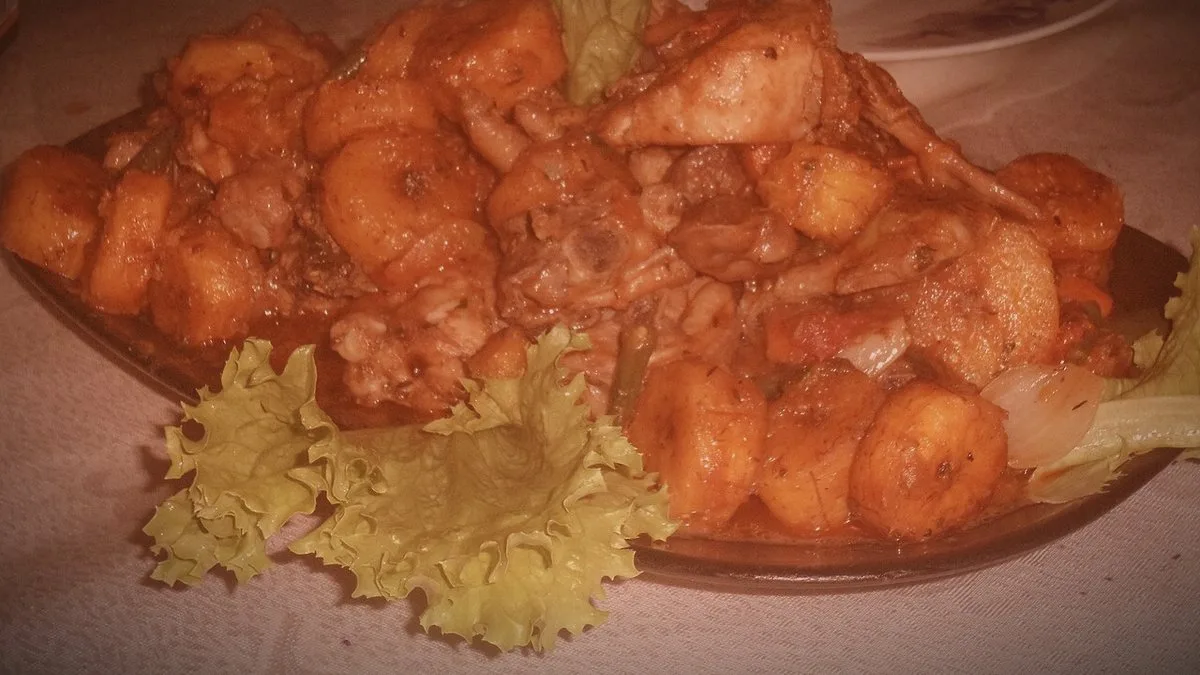
Some dishes tell the story of an era. Poulet DG, a sauté of chicken, plantains, and vegetables, is today one of the great classics of Cameroonian cuisine, the dish brought out for major occasions. But behind its name lies a surprising history, made of ambition, displayed success, and discreet rendezvous. Here is how a 'general manager's' dish became the dish of an entire people, and how to cook it at home.
The 1980s, the era of the 'DGs'
DG stands for 'directeur général' (general manager). According to Wikipedia, the name is a play on words dating back to the 1980s, and the dish was originally reserved for people of a certain social standing. Jeune Afrique, in a series dedicated in December 2020 to the dishes that make Africa proud, recounts the context with relish.
In the Cameroon of those years, young graduates were returning from Western universities. Along with those trained in the country, they occupied important positions in the high administration or in large companies. They displayed what were then called the 'three Vs': the car (voiture), the villa, and the bank transfer (virement), meaning a well-stocked bank account. To flatter their egos, they were called 'general manager,' whether they truly were or not.
'He's out. Wait, he'll be back.'
These young executives had a particularity, according to Jeune Afrique: they were almost never found at their desks. The visitor looking for them always heard the same phrase: 'He's out. Wait, he'll be back.' And the wait often lasted the entire afternoon.
Born in a 'construction site'
So where did the DG go? Still according to Jeune Afrique, he spent the afternoon with his mistress, his 'second office,' in a 'chantier' (construction site): a restaurant improvised in private homes. On-site, he would choose his own chicken from the coop. It was prepared for him with vegetables and plantains. Poulet DG was born.
To impress, nothing was too good. The best products were chosen to seduce the lady, and the expense climbed even higher when the DG invited his colleagues and friends to share the feast. The dish became a sign of success that one shows off.
The other legend
As is often the case with popular dishes, there is another version. The DG, a very busy man, would arrive unexpectedly at his beloved's home. Caught off guard, she would grab whatever she had on hand and quickly prepare the most complete meal possible, with meat, vegetables, and a starch. The magazine Roots, for its part, situates the origin of the dish in the Bamiléké country, in western Cameroon, and reports another legend: it was allegedly invented to quickly feed businessmen between two meetings.
'My husband is capable!'
Over time, Poulet DG left the 'construction sites' to enter family homes, and gradually lost its cheeky origins. Yet it kept its sense of pride. According to Jeune Afrique, serving a Poulet DG remains a way for a man to assert his place in society, while his wife can proudly proclaim: 'My husband is capable!' Capable of spending, and of hosting people around his table.
The secret: patience
Poulet DG cannot be rushed. 'Cooked too quickly, it becomes an ordinary stew,' confides Marie-Antoinette Ngaye Mambou, a nursing assistant in Paris and a cook in her spare time, to Jeune Afrique. The chicken must be seared without falling apart. The plantains, cut into rounds and fried, must be neither too ripe nor too green. The vegetables—green beans, carrots, onions, leeks, and green, red, and yellow peppers, in the colors of Cameroon—must remain crunchy. The plantains arrive at the end, to soak up the juices without becoming mushy. A little tip reported by Jeune Afrique: prefer a shrimp-based bouillon.
From the dish of the powerful to the dish of all
Today, Poulet DG has become democratized. Its ingredients are accessible to everyone, even if its preparation time still makes it a celebratory dish, notes Wikipedia. Many families claim its invention, and chefs offer new versions. It is cooked today as far away as Paris.
The recipe (for 8 people)
This recipe is adapted from the one published by the culinary site 196 flavors, with the cooking tips reported by Jeune Afrique.
Ingredients: 1 chicken cut into pieces, 6 firm plantains, 4 carrots, 150g of green beans, 1 green pepper, 1 red pepper, 1 yellow pepper, 1 onion and 2 red onions, 3 tomatoes, 2 celery stalks, 8 cloves of garlic, a 5cm piece of ginger, 1 bunch of flat-leaf parsley, 1 bouquet garni (thyme and bay leaf), 1 teaspoon of paprika, 150ml of tomato coulis, 3 tablespoons of red palm oil, neutral oil, 25 djansan seeds and 5 pèbè seeds reduced to powder, 2 chili peppers (optional), salt and pepper.
1. Cook the chicken for 45 minutes in boiling salted water with the onion, one carrot, a celery stalk, the bouquet garni, salt, and pepper. Drain and dry it.
2. Brown the chicken pieces in a little neutral oil, then set aside.
3. Cut the plantains into rounds of about 1.5 cm and fry them in hot oil until golden. Set aside.
4. In a large pot, sauté the red onions for one minute in the palm oil. Add the tomatoes and carrots, then the peppers and chili peppers. Add the green beans and the rest of the celery and let sauté for 3 minutes.
5. Add the garlic, parsley, paprika, ginger, djansan, and pèbè. Salt, pepper, and stir for 5 minutes over high heat. Pour in the tomato coulis, cover, and let cook for 10 minutes over medium heat.
6. Add the chicken and plantains, mix gently, and let simmer for 15 minutes over low heat. Serve, with white rice if you wish.
Our perspective
Poulet DG is a mirror. It tells the story of 1980s Cameroon, where a new elite was in a hurry to show its success, with its excesses and its little arrangements. But it also tells the story of the genius of the cooks, capable of transforming a simple chicken into a feast, and a people who knew how to appropriate the dish of the powerful to make it the dish of everyone. Today, it is no longer the title of general manager that counts around the pot, but the pleasure of hosting.
This article was written in French with the help of artificial intelligence from the sources cited below, then translated from French automatically. Read the original.