Top 10: African athletes who made sports history
They ran barefoot, scored at 42, stopped a war with a single appeal, and broke records that still stand. Here are ten African athletes who have left their mark on sports history, listed in chronological order of their achievements. The fourth one appears only on our site.
1. Abebe Bikila (Ethiopia): Barefoot to gold
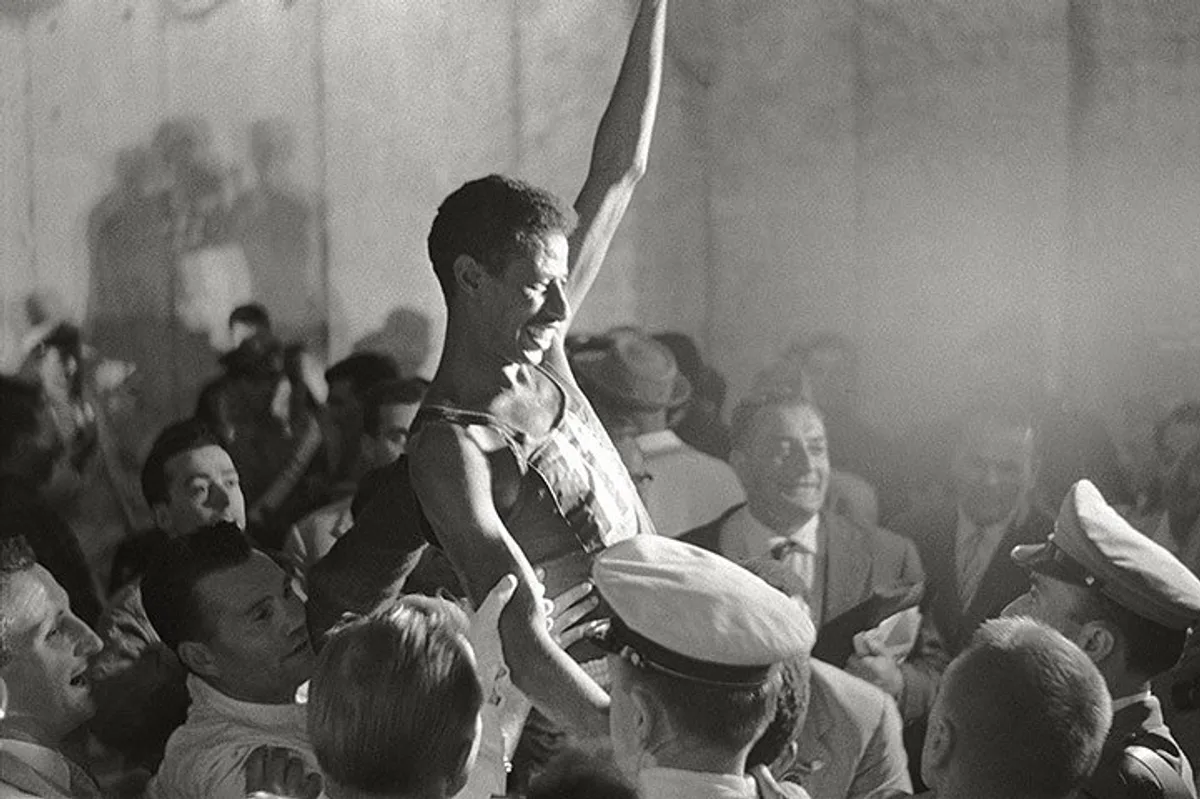
Born in 1932, Abebe Bikila was a soldier in the Ethiopian Imperial Guard when he left for the Rome Games. The shoes he bought there gave him blisters, so he decided to run barefoot. On September 10, 1960, he won the Olympic marathon, arriving at night under the Arch of Constantine and breaking the world record. He was the first Olympic champion in Ethiopia's history.
Four years later, in Tokyo, he won again, once more in record time: no one had ever retained an Olympic marathon title. Paralyzed after a car accident in 1969, he died in 1973 at the age of 41. Generations of East African runners have followed in his footsteps.
2. Nawal El Moutawakel (Morocco): The first champion
At the 1984 Los Angeles Games, the Moroccan athlete won the very first women's 400m hurdles in Olympic history. She became the first Moroccan, Arab, African, and Muslim woman to be an Olympic champion. Morocco's Minister of Sports in 2007 and a member of the International Olympic Committee (IOC) since 1998, she has served as its vice-president since 2016. In 2024, the International Sports Press Association ranked her as the fourth-best athlete of the last hundred years.
3. Roger Milla (Cameroon): The 42-year-old legend
In 1990, Roger Milla was 38 and had retired from international football when the Cameroonian president asked him to return. In Italy, he scored four goals, which he celebrated with a dance at the corner flag, and helped Cameroon become the first African team to reach the quarter-finals of a World Cup. In 1994, at 42, he scored against Russia and broke his own record as the oldest goalscorer in World Cup history. FIFA describes him as "one of the first global stars from Africa."
4. Derartu Tulu (Ethiopia): The story exclusive to our site
At the 1992 Barcelona Games, Ethiopian Derartu Tulu ran the 10,000m neck-and-neck with South Africa's Elana Meyer, lap after lap, far ahead of the others. She won and became the first Ethiopian and the first Black African woman to be an Olympic champion. Eight years later, in Sydney, she won the 10,000m again: the first woman to win this Olympic title twice. She was also a three-time world cross-country champion (1995, 1997, and 2000) and a bronze medalist in Athens in 2004.
5. George Weah (Liberia): The only African Ballon d'Or
In 1995, the Liberian striker, who had just joined AC Milan after playing for Paris Saint-Germain, received the Ballon d'Or and the title of FIFA World Player of the Year. He remains the only African to have won both trophies. Elected African Player of the Century in 1996, he then entered politics: he was President of Liberia from 2018 to 2024, the first former professional African footballer to lead a state.
6. Hicham El Guerrouj (Morocco): The record that endures
In 1998, in Rome, the Moroccan ran the 1,500m in 3:26.00: it is still the world record. His mile record, set in 1999, held for 27 years, until 2026. At the 2004 Athens Games, he won both the 1,500m and the 5,000m: no one had achieved this double since Finland's Paavo Nurmi in 1924.
7. Didier Drogba (Côte d'Ivoire): The call for peace
On October 8, 2005, Côte d'Ivoire beat Sudan and qualified for its first World Cup. In front of the cameras, Didier Drogba begged the fighters of his country, then in civil war, to lay down their arms; his appeal was followed by a ceasefire. For his role in the peace process, Time magazine ranked him among the hundred most influential people in the world in 2010. The top scorer in the history of the Ivorian national team (65 goals) and twice elected African Footballer of the Year, he also announced in 2009 that he was donating 3 million pounds to build a hospital in Abidjan.
8. Dikembe Mutombo (DR Congo): From the court to the hospital
Born in Kinshasa in 1966, Dikembe Mutombo went to study in the United States at Georgetown University with the idea of becoming a doctor. The university's basketball coach spotted him: he became one of the greatest defenders in NBA history, elected four times as the league's Defensive Player of the Year, a record he shares. But his greatest work lies elsewhere: in 2006, he inaugurated the Biamba Marie Mutombo Hospital near Kinshasa, named after his mother, to which he donated more than 18 million dollars of his own money. He died on September 30, 2024, at the age of 58.
9. Eliud Kipchoge (Kenya): Under two hours
World 5,000m champion at 18 in 2003, ahead of Hicham El Guerrouj, Eliud Kipchoge later became the greatest marathoner of his era: Olympic champion in 2016 and 2020, and world record holder from 2018 to 2023. On October 12, 2019, in Vienna, he ran the marathon in 1:59:40, the first human being to finish under two hours. The race, organized specifically with rotating pacers, was not ratified as a world record.
10. Kirsty Coventry (Zimbabwe): The president
A swimmer born in Harare in 1983, Kirsty Coventry won three medals at the 2004 Athens Games and four in Beijing in 2008, including two Olympic titles, one of which was the 200m backstroke in 2004. With seven Olympic medals, she is the most decorated athlete in African history. On June 23, 2025, she became president of the International Olympic Committee: the first woman and the first African to hold this position.
Our perspective
These ten destinies tell the same story: African talent has never been lacking; it was the opportunities that were missing. A barefoot soldier, a Moroccan hurdler, a defender who came to study medicine… Each one opened a door that others have since walked through. And you, which name would you add to this list?
This article was written in French with the help of artificial intelligence from the sources cited below, then translated from French automatically. Read the original.
Sources
- Wikipédia (anglais) : Abebe Bikila
- Wikipédia (anglais) : Nawal El Moutawakel
- Wikipédia (anglais) : Roger Milla
- Wikipédia (anglais) : Derartu Tulu
- Wikipédia (anglais) : George Weah
- Wikipédia (anglais) : Hicham El Guerrouj
- Wikipédia (anglais) : Didier Drogba
- Wikipédia (anglais) : Dikembe Mutombo
- Wikipédia (anglais) : Eliud Kipchoge
- Wikipédia (anglais) : Kirsty Coventry