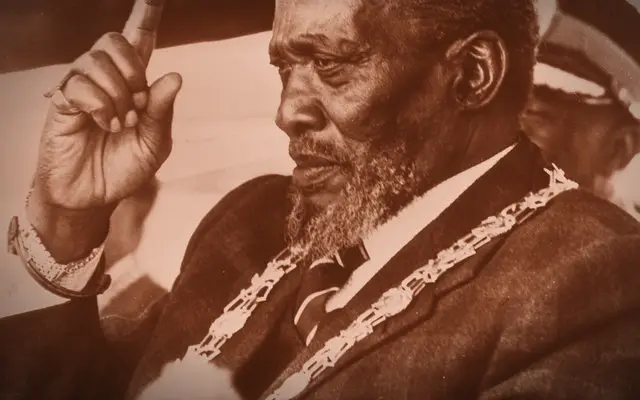
Wole Soyinka, the pen that neither prison nor exile could silence
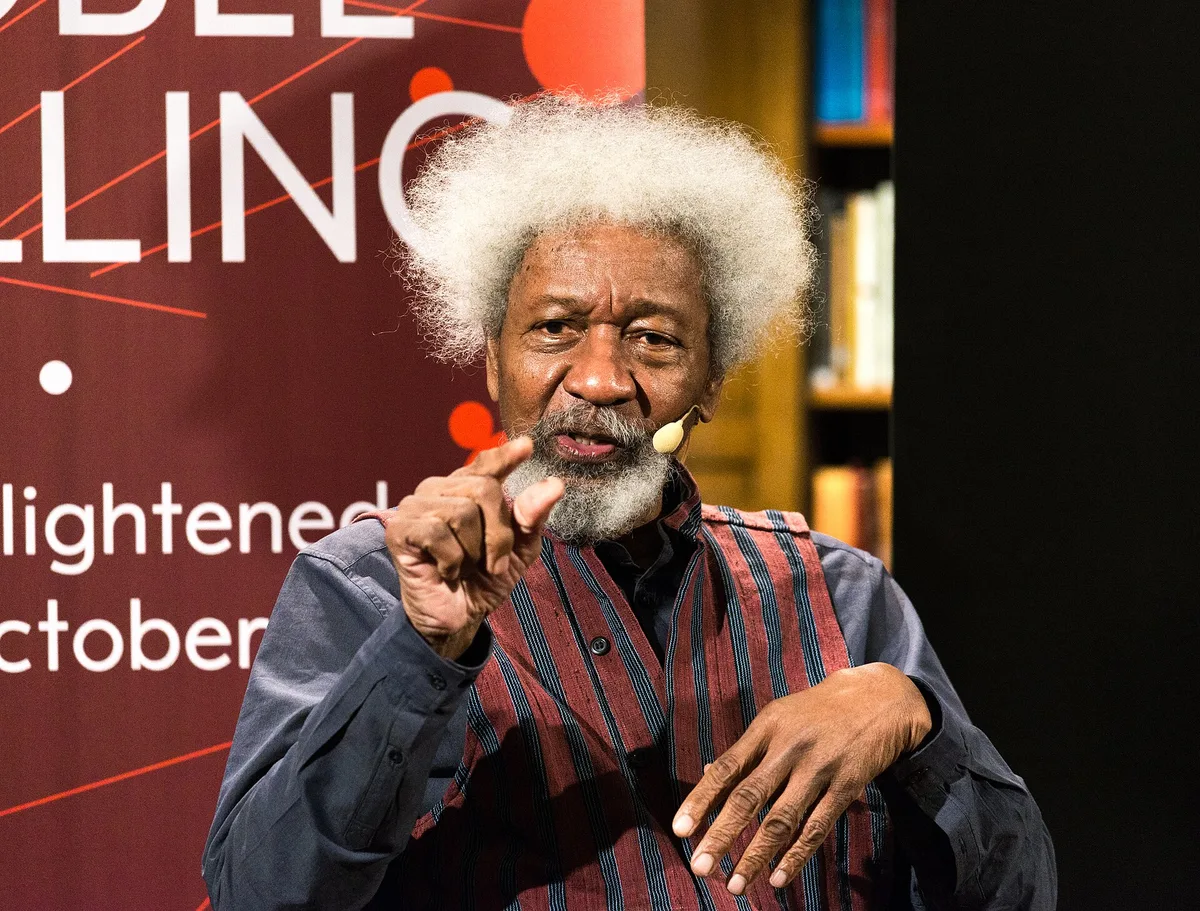
He has known prison for demanding peace, exile for defying a dictator, and the Nobel Prize for giving African theater a universal voice. At 92, Wole Soyinka remains one of the great consciences of the continent. Here is his story, as told by the Nobel Foundation, his own books, and definitive biographies.
A childhood in Aké
Akinwande Oluwole Babatunde Soyinka was born on July 13, 1934, in Aké, a neighborhood of Abeokuta in western Nigeria. He was the second of seven children born to Samuel Ayodele Soyinka, an Anglican pastor and headmaster of St. Peter's Primary School, and Grace Soyinka, a shopkeeper and activist from the Ransome-Kuti family, one of the most influential in the country. The family was Yoruba and Christian; Yoruba culture, its myths, and its gods would nourish his entire body of work.
From 1940 to 1946, he attended the school run by his father, then the Abeokuta Grammar School and the Government College in Ibadan. He would recount these years in "Aké: The Years of Childhood," published in 1981 and awarded the American Anisfield-Wolf Prize in 1983.
England, then the return
After studying English literature, Greek, and history at the University College of Ibadan (1952-1954), he left for the University of Leeds in England, where he earned his degree in 1957. There, he edited the student satirical magazine, recorded for the BBC, and began writing for the theater: "The Swamp Dwellers" and "The Lion and the Jewel." In 1958-1959, he served as a play reader at the Royal Court Theatre in London, a hub for avant-garde theater.
In 1960, the year of Nigeria's independence, a Rockefeller Foundation grant allowed him to return to study African theater. He taught at the universities of Ibadan, Lagos, and Ifẹ, wrote plays performed in both Nigeria and London, and in 1965 published his first novel, "The Interpreters."
1965: the first arrest
Soyinka never separated writing from activism. In 1964, he resigned from the University of Ifẹ to protest pressure from the authorities. In 1965, he was arrested for the first time: he was accused of holding up a radio station at gunpoint and replacing the recorded speech of the Western Region's leader with a tape denouncing electoral fraud. He was released after several months of detention.
1967: 22 months in prison for demanding peace
In 1966, following the military coup, Nigeria slid toward civil war. Soyinka, by then a theater professor at the University of Ibadan, met secretly with the leader of the Eastern Region to try to prevent the conflict and called for a ceasefire in an article. For this, the Nobel Foundation recounts, he was arrested in 1967, accused of complicity with the Biafran rebels, and held as a political prisoner for 22 months, until 1969.
Prison did not silence him. Upon his release, he published his "Poems from Prison" in London. In 1972, "The Man Died," his prison notes, was released. The book was disruptive: in 1984, a Nigerian court banned it.
Exile and the stage
In 1971, concerned about the political situation, he left his post in Ibadan and began years of voluntary exile. In Paris, he performed on stage as Patrice Lumumba, the assassinated Congolese Prime Minister. In Cambridge, in 1973-1974, he wrote "Death and the King's Horseman." As editor-in-chief of the magazine Transition in Accra, he criticized military regimes and protested against the junta of Idi Amin in Uganda.
Returning to Nigeria in 1975, he taught comparative literature at the University of Ifẹ until 1999. In 1979, he directed and performed in "The Biko Inquest," dedicated to the South African activist Steve Biko, who died after being beaten by apartheid police.
1986: the first African Nobel Prize in Literature
In 1986, the Swedish Academy awarded him the Nobel Prize in Literature for a body of work that, "in a wide cultural perspective and with poetic overtones, fashions the drama of existence." He became the first African to receive this prize. He dedicated his Stockholm lecture, "This Past Must Address Its Present," to Nelson Mandela, who was still imprisoned in South Africa at the time.
1994: the escape by motorcycle
The Nobel Prize did not protect him. Under the dictatorship of General Sani Abacha, he openly opposed the regime. In November 1994, he left Nigeria by motorcycle across the border into Benin, then made his way to the United States. In 1997, the regime accused him of treason. During these years, he chaired the International Parliament of Writers, created to defend persecuted authors. He was only able to return to the country after Abacha's death in 1998.
What he believes
Throughout his life, Soyinka refused to choose between art and struggle. He criticized military dictatorships as well as corrupt civilian governments, in Africa and elsewhere. As early as 1962, he was also wary of identity slogans: "A tiger does not proclaim his tigritude, he pounces," he declared regarding Négritude, according to critic Janheinz Jahn. In other words: an identity is proven through actions.
What he leaves us
Three novels, twenty-five plays, seven poetry collections, five memoirs, and essays: a body of work written in English but nourished by Yoruba myths, with Ogun, the god of iron and war, at the center of his theater. In 2021, at 87, he published another novel, "Chronicles from the Land of the Happiest People on Earth." And one sentence, written in 1972 in "The Man Died," which summarizes his entire life: "The man dies in all who keep silent in the face of tyranny."
Our perspective
Nobel Prizes are often presented as quiet consecrations. Wole Soyinka's is the culmination of a life of risks: prison, exile, and accusations of treason. His story reminds us that the freedom to write has never been a gift to Africans; it has been hard-won. And it poses a simple question to each of us: in the face of injustice, what do we do with our voice?
This article was written in French with the help of artificial intelligence from the sources cited below, then translated from French automatically. Read the original.
Sources
- Fondation Nobel : Wole Soyinka, biographie (prix Nobel de littérature 1986)
- Fondation Nobel : Wole Soyinka, faits (motivation du prix)
- Wikipédia (anglais) : Wole Soyinka
- Wikiquote (anglais) : Wole Soyinka (citations et sources d'origine)
- Wole Soyinka, « The Man Died: Prison Notes », Harper & Row, 1972, p. 13