Dangote plans subsea pipeline from Lagos to Ghana to displace imported fuel
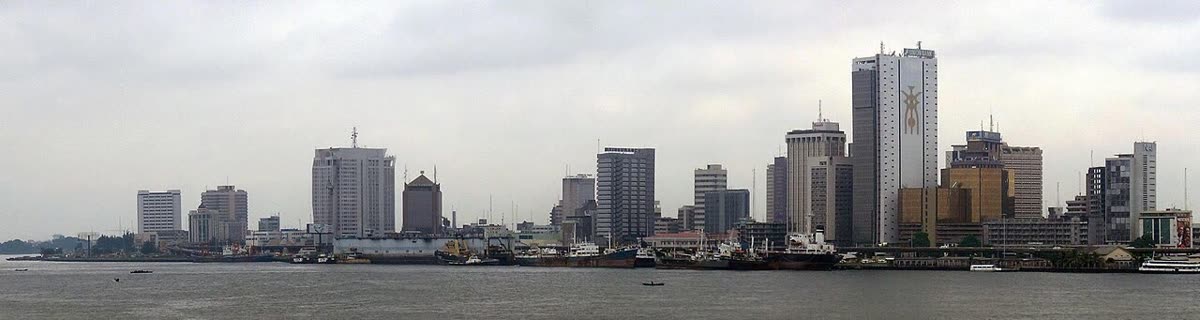
The group owned by Nigerian industrialist Aliko Dangote is preparing a subsea pipeline to transport petrol and other refined fuels from its Lekki refinery, east of Lagos, to Ghana. The news was published on November 3, 2026, by Africa Oil+Gas Report, and on November 4 by Billionaires.Africa, citing unnamed sources within the group. No officials from Dangote, Accra, or Lomé have spoken publicly.
A route mirroring the gas pipeline
According to Africa Oil+Gas Report, the pipeline would start at the Lekki refinery, reach Apapa—the main port of Lagos—before running underwater past Seme, on the Benin border, then Lomé in Togo, and finally Takoradi or Tema in Ghana. The route is said to be "similar" to that of the West African Gas Pipeline, which already transports Nigerian gas to Benin, Togo, and Ghana. The length, capacity, and cost have not been disclosed.
Lomé is the key battleground
The project aims to supply Togo directly and compete with storage terminals in Lomé, a regional hub where Nigerian distributors themselves still go to fetch petroleum products, writes Africa Oil+Gas Report. It is the continuation of a battle waged for years: refining on the continent rather than exporting crude to buy back finished fuel. The Lekki plant processes 650,000 barrels per day.
A network taking shape from coast to coast
Construction would only begin in 2028, after ongoing infrastructure projects in Kenya, Djibouti, Ethiopia, and Namibia, the two publications specify. Billionaires.Africa estimates the group's planned investments between 2026 and 2030 at around $50 billion: a $660 million oil pipeline between Djibouti and Ethiopia, the October acquisition of a 24.76% stake in Kenya Pipeline Company for $327 million, and a 2,650-kilometer, $3.5 billion project across Namibia, Botswana, and South Africa.
In Kenya, a revived pipeline project
On September 30, the group broke ground on a 700,000 barrel-per-day refinery in Lamu on the Kenyan coast, valued at around $16 billion and promised within forty months, with a 30% stake offered to East African states. An economic advisor to President William Ruto, quoted by Billionaires.Africa, confirms that Nairobi wants to revive the 892-kilometer pipeline meant to connect the Turkana fields to Lamu, a project previously shelved due to a lack of funding.
Until either the governments concerned or the group officially confirm it, this pipeline must be understood for what it is: a project disclosed by sources close to the matter. It fits into a strategy that places a growing share of the continent's fuel supply in the hands of a single private group.
This article was written in French with the help of artificial intelligence from the sources cited below, then translated from French automatically. Read the original.