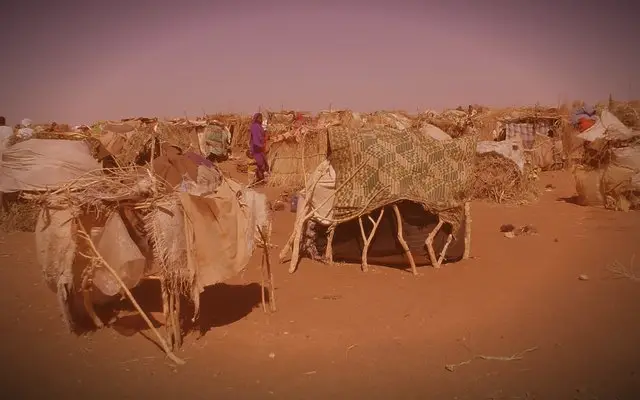
El Niño: UN has received only one-fifth of the $202 million requested

With just weeks to go before the expected peak of El Niño, the humanitarian appeal launched jointly by the FAO and the World Food Programme (WFP) has received only about one-fifth of the $202 million requested, or some $40 million, reported Africanews on September 25, 2026.
Twelve African countries out of twenty-two
The appeal, published on June 18, 2026, and covering the period from June 2026 to March 2027, aims to protect 8.8 million people in 22 high-risk countries. Twelve are African: Cameroon, Ethiopia, Kenya, Madagascar, Malawi, Mozambique, Nigeria, Somalia, Sudan, South Sudan, Uganda, and Zimbabwe. According to Africanews, six million Somalis are already in a food crisis situation.
"Acting early is more effective and less costly"
The logic behind this appeal is that of anticipatory action: intervening before drought or floods strike, rather than repairing the damage afterward. The FAO estimates that every dollar invested in this way can prevent up to seven dollars in losses. "Acting early is more effective and less costly," summarized Beth Bechdol, Deputy Director-General of the organization, at the launch of the appeal.
Rein Paulsen, Director of Emergencies at the FAO, identified the crux of the problem: funding remains, in his view, a real obstacle that limits the capacity to mitigate the impact of both floods and droughts. El Niño, which periodically warms the waters of the equatorial Pacific, disrupts rainfall patterns far beyond that ocean.
What comes next
The peak of the phenomenon is expected between October and December 2026, according to Africanews. Once this point is passed, the nature and cost of the interventions change: it is no longer a matter of prevention, but of rescue—later, more expensive, and with poorer results.
This funding gap deserves to be named for what it is: an arbitration. The forecasting tools exist, the at-risk countries have been identified since June, and the economic calculation is documented by the agencies themselves. What is missing is not knowledge, but the decision to pay. And the consequences of this hesitation will be measured first in villages in the Horn of Africa and Southern Africa, very far from the capitals that hold the purse strings.
This article was written in French with the help of artificial intelligence from the sources cited below, then translated from French automatically. Read the original.