Gule Wamkulu: The Chewa masked dance that lets spirits speak
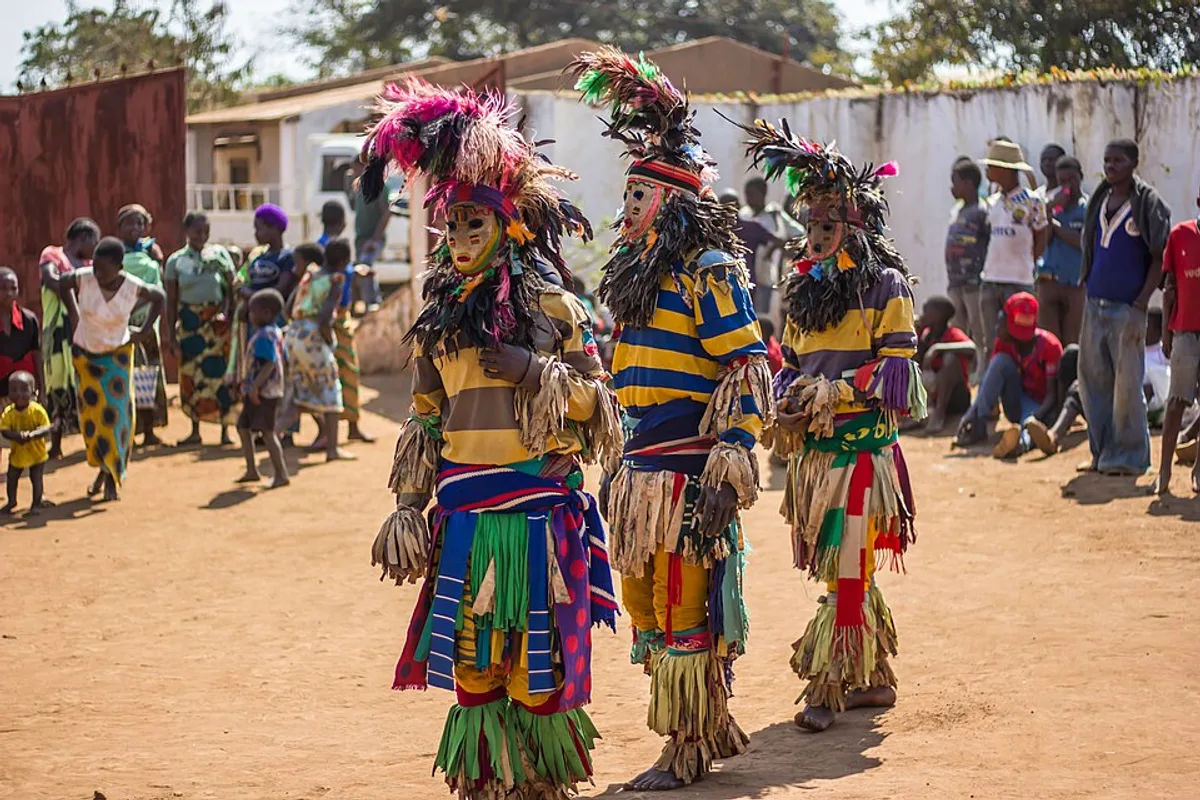
In Malawi, a masked dance concludes the initiation of boys among the Chewa people. The dancers, their faces hidden behind colorful masks, move in a group to the sound of drums. It is called the Gule Wamkulu, or "the great dance."
A semi-secret society
The dance is organized by the Nyau society, a semi-secret brotherhood. It concludes the boys' initiation rite, which takes place after the harvest. It also accompanies funerals and the installation of chiefs, moments when the entire community gathers.
Masks to speak with the dead
Each mask has a meaning. Some represent the spirits of the deceased, others represent animals, wild spirits, or even caricatures of village figures. For the Chewa, the dance serves to communicate with the world of the ancestors.
A heritage recognized in 2005
On November 25, 2005, UNESCO inscribed the dance on its list of Masterpieces of the Oral and Intangible Heritage of Humanity. Its origins are ancient: some sources trace them back to the 17th century, though the date has not been established with certainty.
Increasingly rare masks
The masks were traditionally made of wood, skin, feathers, and straw. They are gradually being replaced by rubber and plastic copies. Their creation relies on a few master elders, and documentation regarding this craftsmanship remains scarce.
Where to see the masks
The Kungoni Centre and the Chamare Museum in Dedza house collections of these masks. The Carlos Museum at Emory University in the United States also possesses an example.
Our perspective
The Gule Wamkulu reveals an Africa where the mask is not a decorative object, but a link between the living and the dead. Seeing it in a photograph is not enough: one must understand what it tells, and who is wearing it.
This article was written in French with the help of artificial intelligence from the sources cited below, then translated from French automatically. Read the original.