Kente, the cloth of Ghana's kings where every color carries a message
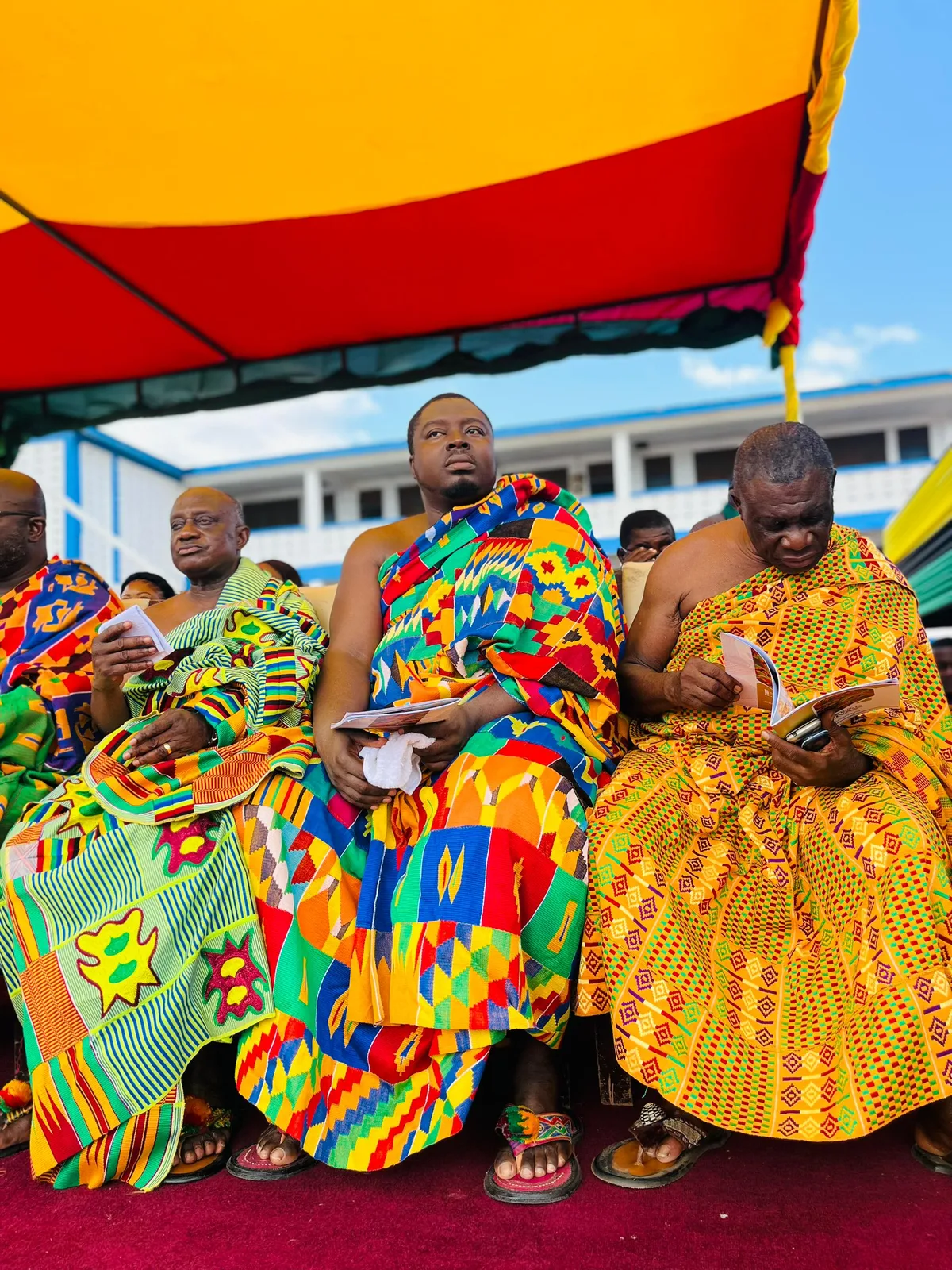
Weddings, coronations, graduations: in Ghana and far beyond, kente dresses up the big days. This fabric made of hand-woven silk and cotton strips is much more than a garment. It is a language.
A name, two meanings
The word kente is said to come from kɛntɛn, which means "basket" in the Ashanti dialect of the Akan language, in reference to its patterns that recall basketry. The Akan also call it nwentoma, "the woven cloth."
A legend: Ananse's web
According to an Ashanti legend, two friends from the village of Bonwire, who went hunting in the forest, observed the spider Ananse weaving its web. Upon returning to the village, impressed, they imitated its patterns: this is how kente was born. The Ewe, who also weave kente, have their own story of its origins, located in Agotime.
What history says
According to Ashanti oral tradition, kente was born in Bonwire, in the current Ashanti region of Ghana, in the 17th century. Archaeologists have found spindle whorls and dye vats at Begho and Bono Manso dating from the 14th to the 18th century, signs of ancient weaving in southern Ghana. In the 18th century, Danish agents described the workshop created by the Ashanti king Opoku Ware I: cotton strips "three fingers wide," twelve of which, sewn together, form a piece. The king bought silks of all colors, which his artisans unraveled to reweave the threads. In 1817, the English traveler Thomas Edward Bowdich described fabrics of all colors and patterns, "of incredible size and weight."
Among the Ewe, according to oral tradition, weaving dates back to the 16th century; their kente is recognized by its double-woven strips.
A transmitted know-how
Kente is woven on a wooden loom. Weavers learn for several years under a master before creating their own patterns. Kente weaving is traditionally a male activity. Bonwire, Sakora Wonoo, Ntonso, Safo, and Adawomase, in the Ashanti region, are renowned for their authentic kente.
The language of colors
Each color has a meaning. Gold evokes royalty, wealth, and glory; yellow, preciousness and fertility; green, vegetation, harvests, and renewal; blue, peace, harmony, and love; white, purification and celebrations; black, maturity and the spirit of the ancestors; gray, healing; silver, serenity and the moon.
Hundreds of patterns, each with a name
There are hundreds of kente patterns, and each carries a name or a message chosen by the weaver: a proverb, a historical event, a chief, a queen mother, a plant. In Ghana, one chooses a kente as much for its name as for its colors. The most elaborate, the adweneasa, covers every free space with patterns: its name means "I have exhausted my know-how."
From the palace to graduations
Once reserved for great occasions and kings, kente has spread widely in Ghana to celebrate important events. In the diaspora, particularly among African Americans, kente stoles are worn during graduations as a visible sign of Africa.
A protected heritage
In December 2024, UNESCO inscribed kente on the Representative List of the Intangible Cultural Heritage of Humanity. In September 2025, Ghana made it a geographical indication: only kente woven according to traditional techniques, in localities recognized as Bonwire, Agotime Kpetoe, or Sakora Wonoo, can now bear this name.
Our perspective
Wearing kente means wearing a message, a history, and the work of patient hands. And you, would you wear kente on the most beautiful day of your life?
This article was written in French with the help of artificial intelligence from the sources cited below, then translated from French automatically. Read the original.