October 27, 1971: The Congo becomes Zaire, a decolonization of names and nothing more
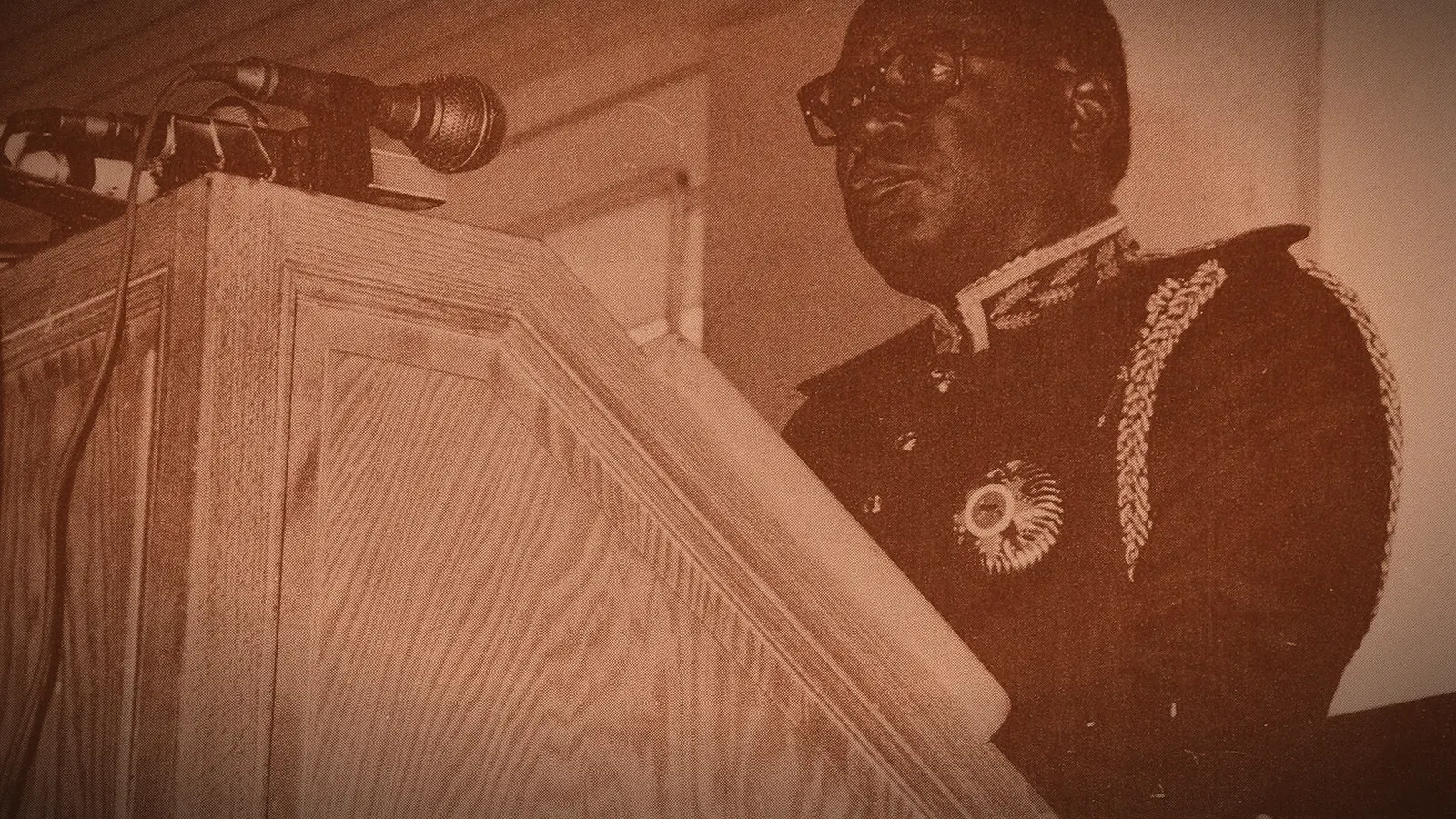
On October 27, 1971, President Mobutu Sese Seko announced that the Democratic Republic of the Congo would henceforth be called the Republic of Zaire. The country, the river, and the currency all bore the same name: the "three Zs." Fifty-five years later, this day remains widely discussed: a decolonization through words, imposed by a regime that locked down everything else.
An African name that passed through Portuguese ships
The word "Zaire" comes from the river: according to the encyclopedic entry dedicated to the country, it is a Portuguese distortion of the Kikongo word "nzadi," translated as "the river that swallows all rivers." The name presented as the most authentic on the continent therefore arrived through the mouths of European merchants.
The gesture did not come out of nowhere: "authenticity" had been the official doctrine since the N'sele Manifesto in May 1967. Léopoldville had become Kinshasa in 1966, Stanleyville became Kisangani, and Élisabethville became Lubumbashi; in 1972, Katanga was renamed Shaba. Erasing the names of Belgian kings and officers from the map was a demand for dignity widely shared across Africa.
On January 2, 1972, the campaign reached a turning point: Zairians bearing a European or Christian first name were required to change them. Mobutu became Mobutu Sese Seko Kuku Ngbendu Wa Za Banga, and the suit gave way to the abacost, a contraction of "à bas le costume" (down with the suit).
Names change, power tightens
In the 1970 presidential election, in a single-party state, Mobutu received more than 10,131,000 votes against 157. On November 30, 1973, he announced "Zairianization": farms, plantations, and businesses were to return to the "sons of the soil." In reality, according to a historical study cited by GlobalSecurity, about 300 people shared the spoils, mostly party and government officials.
The consequences were severe, according to the same source: disorganized businesses, layoffs, shortages, and plantations nearly at a standstill. In November 1975, a committee organized the retrocession, and former foreign owners recovered up to 60% of the capital. The proclaimed economic sovereignty had morphed into a redistribution among those close to the regime.
What historians are debating
The assessment of the period is not unanimous. The work of historian Benoît Henriet, published in 2022 in the Journal of Eastern African Studies and referenced by the African Union Commission library, shows that at the University of Lubumbashi, researchers conducted a genuine decolonization of knowledge, sometimes close to official authenticity, sometimes in conflict with it.
The name lasted for twenty-six years: on May 21, 1997, four days after Mobutu's departure, Laurent-Désiré Kabila restored the Democratic Republic of the Congo.
The name lasted for twenty-six years: on May 21, 1997, four days after Mobutu's departure, Laurent-Désiré Kabila restored the Democratic Republic of the Congo.
Renaming a country, a river, and a currency does not decolonize anything if citizens have neither free elections nor control over their resources. Sovereignty is measured by the rights of the people, not by symbols.
This article was written in French with the help of artificial intelligence from the sources cited below, then translated from French automatically. Read the original.