Ruth First, the journalist apartheid could never silence
She never carried a weapon. Her weapons were investigation, writing, and the refusal to be silenced. Ruth First, a South African journalist and researcher, paid for her fight against apartheid with her life. Here is her story, as told by her biographies and her own books.
A childhood in a militant home
Heloise Ruth First was born on May 4, 1925, in Johannesburg. Her parents, Julius First and Matilda Leveta, arrived in South Africa as children, one from Latvia and the other from Lithuania. Both were activists and among the founders of the South African Communist Party. Ruth grew up with her brother Ronald in the Kensington neighborhood, in a house where politics was everywhere; by age 14, she was already attending a youth activist book club.
The first in her family to attend university
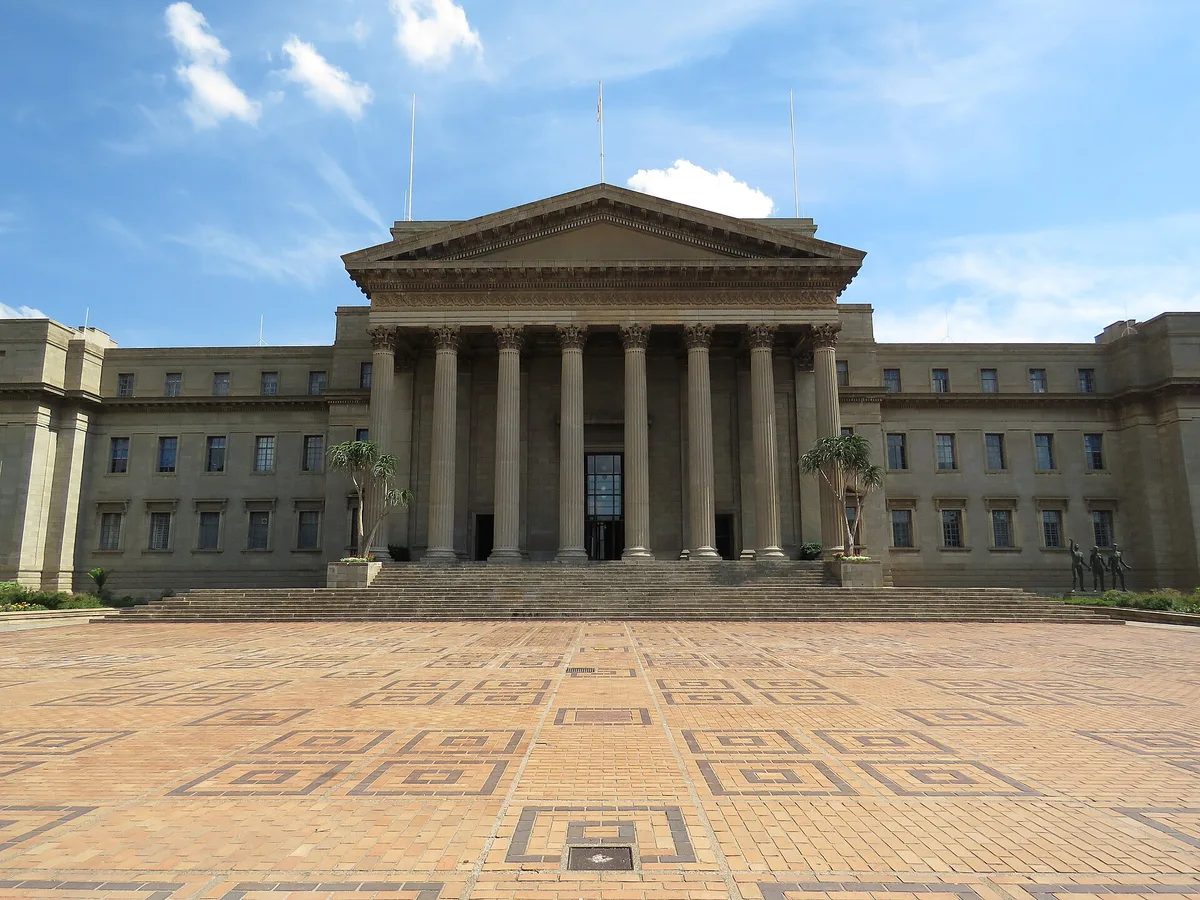
After attending the Jeppe High School for Girls, she became the first in her family to enter university. In 1946, she earned a Bachelor of Social Science degree from the University of the Witwatersrand, with honors in anthropology, economic history, and sociology. On campus, she participated in the founding of a progressive student federation and crossed paths with Nelson Mandela, the future president of South Africa, and Eduardo Mondlane, the future leader of Frelimo in Mozambique.
A journalist against censorship
After an initial job with the Johannesburg city social services, she became the editor of The Guardian newspaper, which was banned by the state and forced to change its name several times. Through her investigations, she denounced the racial segregation affecting Black people, which intensified after the National Party came to power in 1948. In 1949, she married Joe Slovo, an activist like herself; they would have three daughters. In 1955, she took over the direction of the magazine Fighting Talk.
The Freedom Charter
Ruth First was a member of the drafting committee for the Freedom Charter, a major document of the anti-apartheid struggle, presented on June 25, 1955, at the Congress of the People in Kliptown. However, due to a banning order, she could not attend its presentation.
Accused of treason
In 1956, she was among the 156 activists arrested and accused of high treason, including Nelson Mandela. Her own writings were used as evidence by the prosecution. After four years of trial and pressure, all were acquitted. After the Sharpeville massacre in 1960, she was placed on a list of banned persons: she could no longer meet, publish, or be quoted. She fled to Swaziland for a time with her children before returning clandestinely to Johannesburg. In 1961, she investigated in Namibia and produced her first book, "South West Africa."
117 days in solitary confinement
In 1963, the police arrested her in the main hall of the Witwatersrand library. She was held in solitary confinement, without charge, for 117 days under a law allowing imprisonment without trial for renewable 90-day periods. She was the first white woman detained under this law. Interrogated many times, she provided no information about her comrades. Released on November 7, 1963, she was immediately arrested again, then released without charge on December 4. She would recount this ordeal in "117 Days," published in 1965.
Exile and research
In March 1964, she went into exile in London, where she joined the British anti-apartheid movement. She edited the biographies of Nelson Mandela, Govan Mbeki, and Oginga Odinga, and traveled across Africa from 1964 to 1968 to study independence struggles, from Algeria to Nigeria. In 1970, she published "The Barrel of a Gun," an analysis of power and coups d'état in Africa. A recognized researcher, she taught at the University of Manchester and then, from 1973 to 1978, at the University of Durham.
In November 1978, she became the director of research at the Centre of African Studies at Eduardo Mondlane University in Maputo, Mozambique.
The letter bomb
On August 17, 1982, in her university office, she opened a letter bomb sent on the orders of Craig Williamson, a South African police commander. A colleague present that day, the anthropologist Bridget O'Laughlin, would later testify before the Truth and Reconciliation Commission. On August 24, 1982, presidents and ambassadors from 34 countries attended her funeral in Maputo.
Her words
In "The Barrel of a Gun" (1970), she wrote: "Colonialism rested on authoritarian command; it was therefore incompatible with any preparation for self-government," and elsewhere: "They governed not only without the people, but in spite of them." These sentences express her conviction: freedom is not decreed, it is prepared.
Our perspective
Ruth First reminds us that the fight against apartheid was also waged with pens, notebooks, and investigations. She chose to tell what the authorities wanted to hide, and paid for it with her freedom and then her life. Today, across Africa, journalists continue this work. Reading, supporting, and protecting them is how we keep her legacy alive.
This article was written in French with the help of artificial intelligence from the sources cited below, then translated from French automatically. Read the original.