October 29, 1956: Three armies attack Egypt to retake the Suez Canal
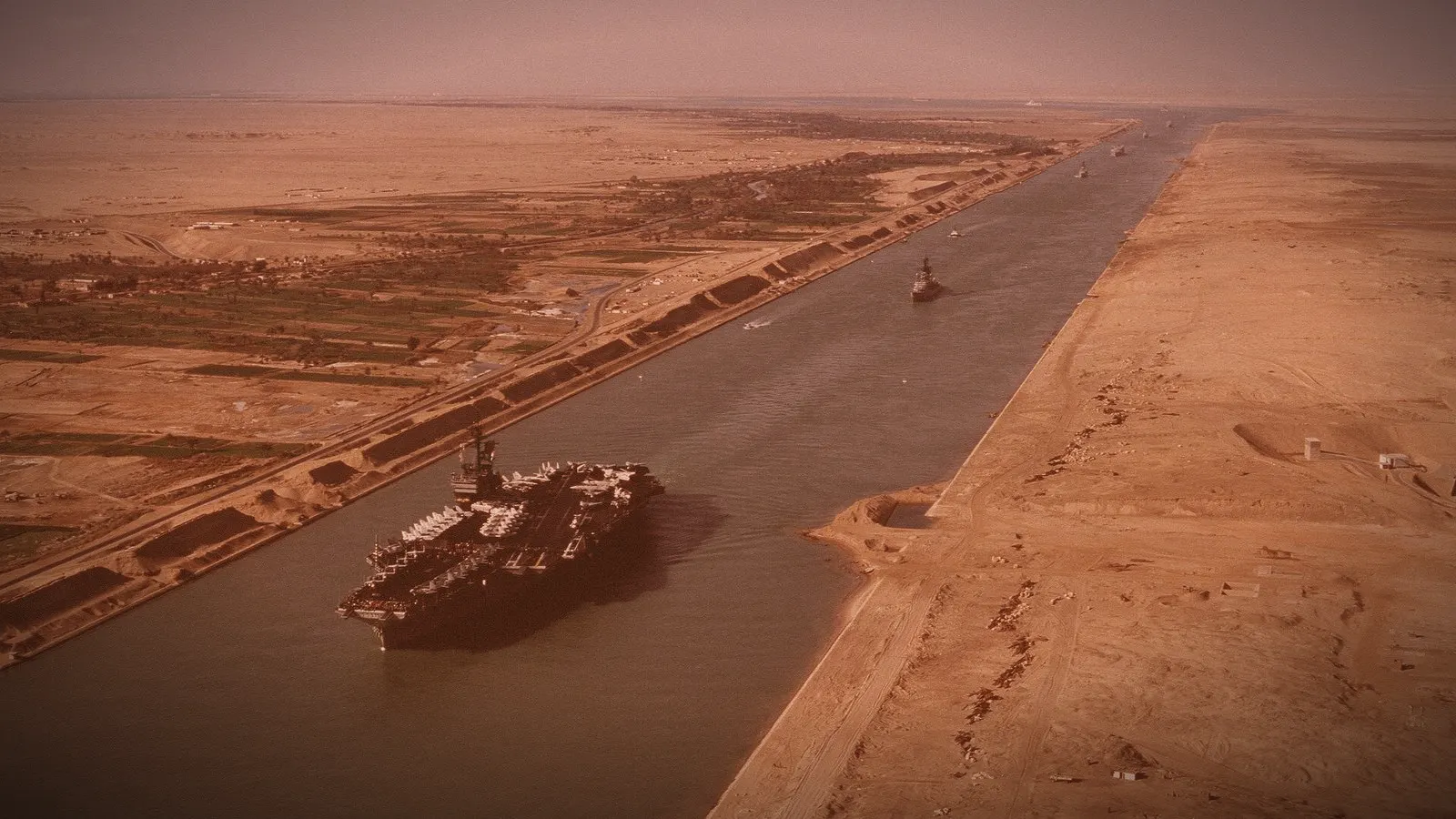
On October 29, 1956, the Israeli army crossed the Egyptian border and entered the Sinai and the Gaza Strip. Two days later, French and British aviation bombed Egypt. The cause is well known: three months earlier, on July 26, 1956, President Gamal Abdel Nasser had announced the nationalization of the Suez Canal Company.
A canal dug by Egyptians, owned by others
The canal was dug between 1859 and 1869, under a 99-year concession that was set to expire in 1968. To dig these 164 kilometers, the Viceroy of Egypt resorted to forced labor: approximately 400,000 fellahin were mobilized between 1859 and 1862, according to historian Caroline Piquet (CNRS/Sorbonne University), as cited by CNRS Le Journal. How many died? "Several tens of thousands," she estimates; the figure of 120,000 deaths, put forward much later by Nasser himself, cannot be verified due to a lack of archives.
In 1875, a bankrupt Egypt had to sell the 44% stake it held to London; in 1882, Great Britain militarily occupied the country. By nationalizing the canal, Nasser was also responding to the American refusal to finance the Aswan High Dam, Caroline Piquet emphasizes.
A secret agreement signed in Sèvres
The retaliation was prepared. From October 22 to 24, 1956, France, the United Kingdom, and Israel reached a secret agreement in Sèvres: Israel would attack on October 29, then Paris and London would demand that both sides move away from the canal before striking Egypt in the event of a refusal. The plan was executed to the letter. The ultimatum was issued on October 30, Nasser rejected it; the bombings began on October 31, paratroopers jumped over Port Said on November 5, and the Royal Marines landed on November 6.
The number of Egyptians killed "has never been reliably established," acknowledges Wikipedia in English, which cites estimates of 1,650 to 3,000 deaths, including about a thousand civilians; the French version mentions 750 to 1,000 deaths, mainly civilians. On the other side, losses were in the dozens: 22 British and 10 French soldiers killed.
Beaten on the ground, victorious at the UN
On November 2, 1956, the United Nations General Assembly adopted Resolution 997 by 64 votes to 5, with 6 abstentions: ceasefire, withdrawal, reopening of the canal. Abandoned by Washington, which allowed the pound sterling to plummet, London and Paris completed their withdrawal on December 22, 1956; Israel did not evacuate the Sinai and Gaza until March 1957.
Egypt kept the canal. Nasser emerged from the ordeal with significantly increased prestige, and the crisis strengthened the Algerian FLN, supported by Cairo, in a wave of solidarity from Africa and Asia.
Key takeaways
Three armies attacked Egypt to take back an infrastructure it had just nationalized. Ten days of war and a military defeat later, the canal remained Egyptian.
This article was written in French with the help of artificial intelligence from the sources cited below, then translated from French automatically. Read the original.