October 30, 1974: In Kinshasa, Muhammad Ali regains his title and Africa becomes the center of the world
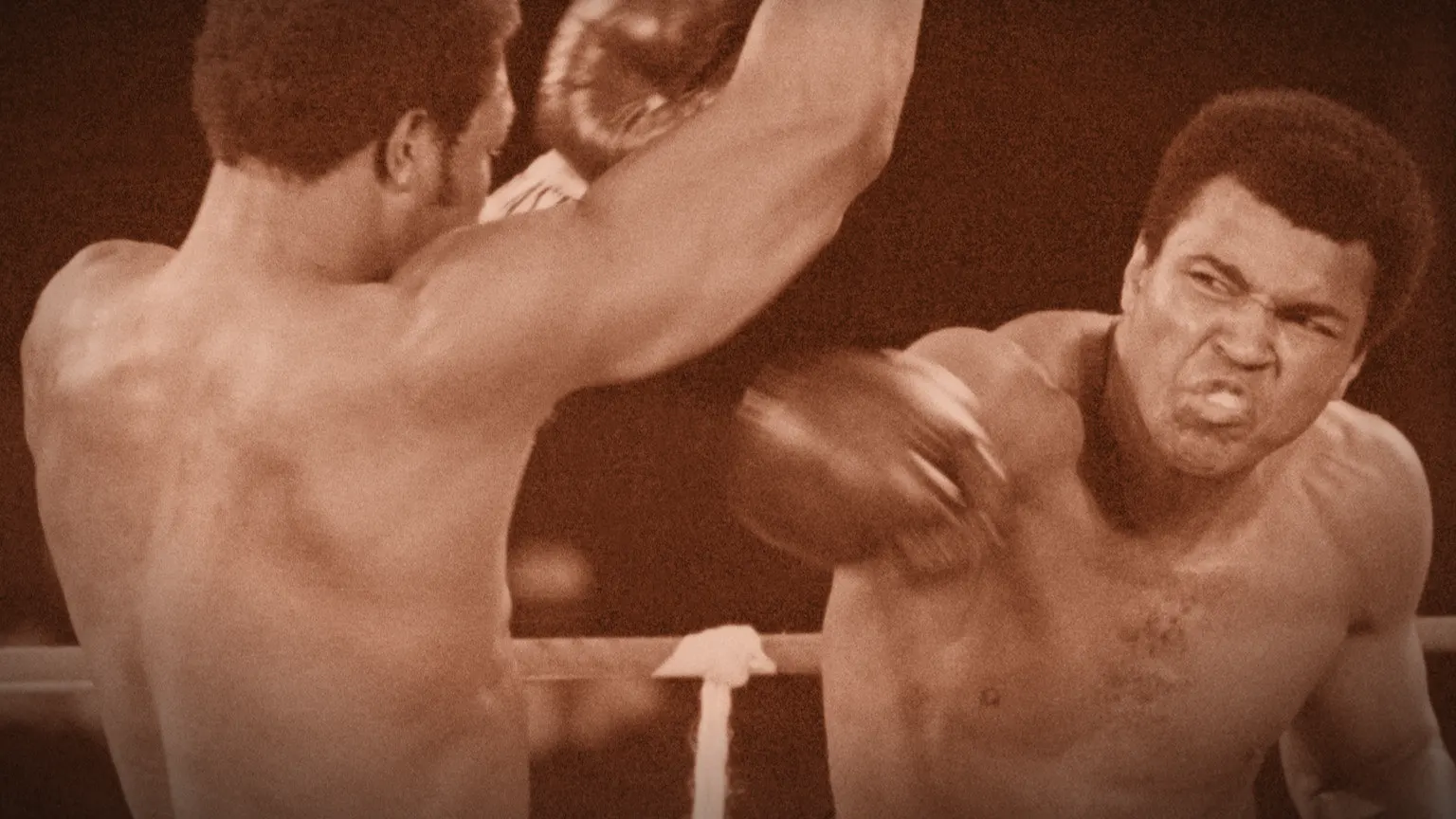
On October 30, 1974, at the 20th of May Stadium in Kinshasa, Muhammad Ali knocked out George Foreman in the eighth round to become world heavyweight champion once again, seven years after being stripped of his title. Sixty thousand people were in the stands, according to Wikipedia, and the fight was scheduled for around 4 a.m. to align with American prime-time hours. For the first time, a world heavyweight championship was held on African soil.
A fight the regime wanted for its showcase
The setup was the work of promoter Don King, who had promised each boxer a record purse of 5 million dollars without actually having the money and could not organize the event in the United States. He needed a host country: Mobutu Sese Seko's Zaire stepped forward. According to an investigation by RFI signed by Laurent Correau, Mobutu saw it as a communication tool to establish himself as a major leader on the continent; on the posters, recalls Congolese academic Eddy Tambwe, the president appeared larger than the boxers.
Sources differ on who paid: the RTBF writes that Mobutu settled the purses on the condition that the fight be held in Kinshasa, while Don King claimed on television that he had been helped by Libya's Muammar Gaddafi. Postponed by five weeks after Foreman suffered an injury during training, the fight followed the Zaire 74 festival, held from September 22 to 24 featuring James Brown, Miriam Makeba, and Tabu Ley Rochereau.
"Ali boma ye": the crowd had chosen its side
Ali, who had kissed the Congolese soil upon his arrival, presented himself as a son returning home. The crowd took up his chant, "Ali boma ye" — "Ali, kill him" in Lingala. According to witness Séraphin Awazi, cited by RFI, 80% of the public supported Ali, and Foreman would later admit in his memoirs that he could not win in front of that crowd. Leaning against the ropes for entire rounds, Ali let his opponent exhaust himself before knocking him down with a right hand; referee Zack Clayton stopped the fight.
Some sources estimate up to a billion viewers, which would make it the most-watched live broadcast of the era: an estimate, not a count. What Africa gained from it is real: the image of a continent capable of hosting the biggest sporting event on the planet, and a fight "between two Black men, in a Black nation," according to slogans painted on the walls of Kinshasa. What the Zairians did not gain is also real: the regime derived a prestige from it that it made its people pay for for another twenty-two years.
Key takeaways
On October 30, 1974, Kinshasa offered the world its greatest boxing match and proved that Africa could be the stage, and not just the backdrop. But the celebration also served as a showcase for a dictatorship: both truths exist within the same night.
This article was written in French with the help of artificial intelligence from the sources cited below, then translated from French automatically. Read the original.