Top 10: The African musicians who changed world music
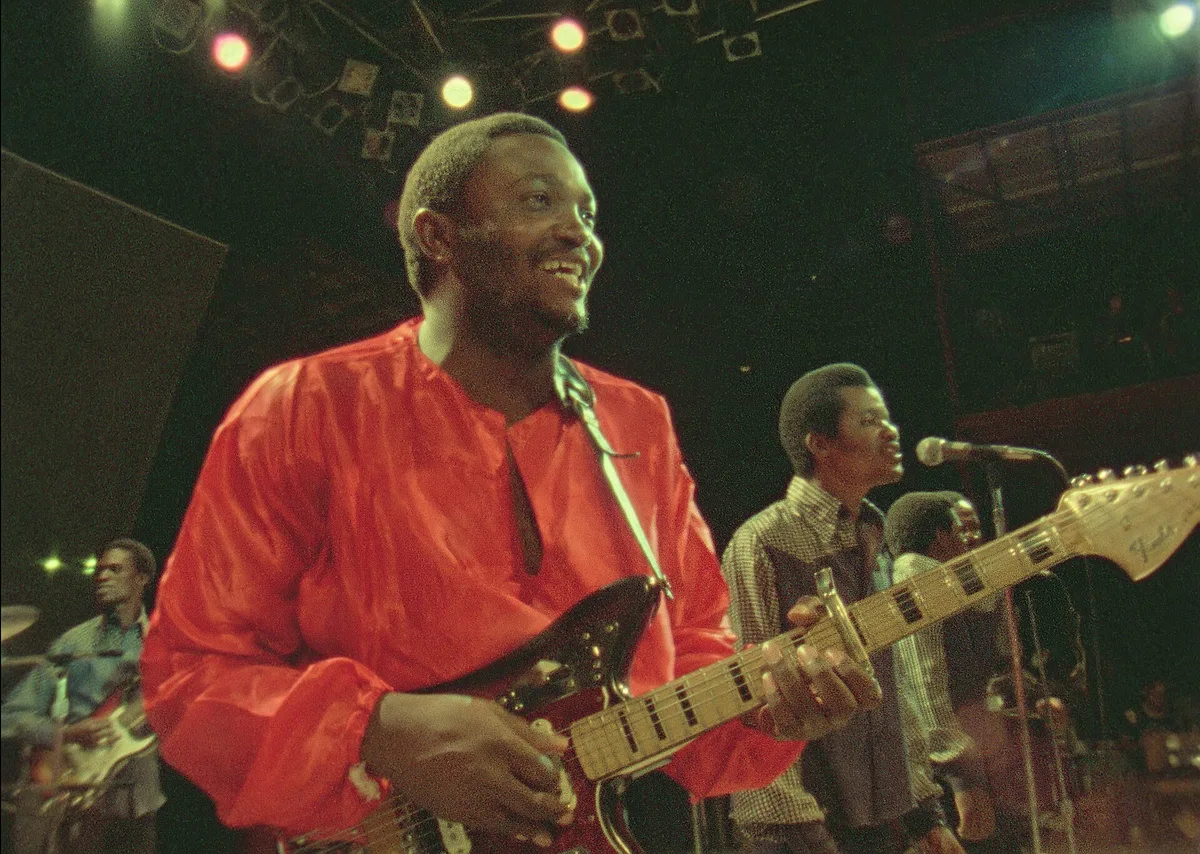
They invented genres, filled stadiums, and won Grammy Awards. Here are ten African musicians who changed world music, listed in chronological order of their breakthrough. The fourth appears exclusively on our site.
1. Franco Luambo (DR Congo): The sorcerer of the guitar
François Luambo Makiadi, known as Franco (1938-1989), co-founded OK Jazz in 1956, later renamed TPOK Jazz, "the almighty Kinshasa jazz orchestra". For over twenty years, he turned it into the most popular and influential African orchestra of its era. A master of Congolese rumba, he was nicknamed "the sorcerer of the guitar" and "the grand master of Zairean music".
2. Miriam Makeba (South Africa): Mama Africa
Zenzile Miriam Makeba (1932-2008) is one of the first African musicians to achieve worldwide recognition. Together with Harry Belafonte, she received a Grammy Award for their 1965 album, and her track "Pata Pata" (1967) became an international hit. In exile, she testified against the apartheid government before the United Nations and became active in the American civil rights movement.
3. Fela Kuti (Nigeria): The inventor of afrobeat
Fela Anikulapo Kuti (1938-1997) is considered the primary creator of afrobeat, which blends West African music, funk, and jazz. In 1970, he founded the "Kalakuta Republic", a commune, studio, and home that he declared independent from the military regime. His immensely popular music disturbed the authorities: the commune suffered numerous raids. Fela and Nobel laureate Wole Soyinka belong to the same family: both descend from Reverend Josiah Ransome-Kuti.
4. Manu Dibango (Cameroon): The story exclusive to our site
Emmanuel "Manu" Dibango (1933-2020), a Cameroonian saxophonist, blended jazz, funk, and Cameroonian music. In 1972, he recorded "Soul Makossa", originally as the B-side to an anthem for the Cameroon national football team. Discovered in a Brooklyn record store, the track entered the US Billboard chart in 1973 and became the most sampled African song in history.
Its chorus, "ma-ma-ko, ma-ma-sa, ma-ko-ma-ko-sa", traveled around the world. In 1982, Michael Jackson lifted it without authorization or credit in "Wanna Be Startin' Somethin'", on the Thriller album. Jackson acknowledged borrowing it, and the matter was settled out of court. In 2007, Rihanna also used the passage in "Don't Stop the Music". Manu Dibango died of Covid-19 on March 24, 2020.
5. Khaled (Algeria): The king of raï
Born in 1960, Khaled started at a very young age under the name Cheb Khaled. In 1992, his album produced by Don Was and his single "Didi" turned him into an international star, from Europe to the Arab world and all the way to India. He holds the Guinness record for the best-selling raï artist.
6. Ali Farka Touré (Mali): Desert blues
Ali Farka Touré (1939-2006), a pioneer of desert blues, won a Grammy with "Talking Timbuktu" (1994), recorded with American guitarist Ry Cooder, and a second in 2005 with Toumani Diabaté. Rolling Stone ranked him 76th on its list of the "100 Greatest Guitarists of All Time". In 2004, he became mayor of Niafunké, his hometown, and personally funded roads and electricity.
7. Youssou N'Dour (Senegal): The voice of mbalax
Born in 1959, Youssou N'Dour helped create mbalax, a fusion of traditional Senegalese music and Latin influences. In 1994, "7 Seconds", a duet with Neneh Cherry, became his biggest international success. He won a Grammy in 2005 and is listed by Rolling Stone among the 200 greatest singers of all time.
8. Cesária Évora (Cabo Verde): The barefoot diva
Cesária Évora (1941-2011) sang morna, the archipelago's music, in Cape Verdean Creole, dealing with themes of love, longing, and exile. Known for performing barefoot, she received a Grammy in 2004 and influenced many artists, including Madonna.
9. Angélique Kidjo (Benin): Five Grammy Awards
Born in 1960, Angélique Kidjo has won five Grammy Awards and the Polar Music Prize. She has collaborated with Alicia Keys, Peter Gabriel, Bono, and Burna Boy, and speaks five languages, including Fon and Yoruba. In 2021, Time magazine named her one of the 100 most influential people in the world.
10. Burna Boy (Nigeria): Afrobeats at the top
Born in 1991, Burna Boy won the Grammy for Best Global Music Album in 2021 with "Twice as Tall". He is the first African artist to have two albums surpass one billion streams on Spotify, and the first to win Best International Act at the BET Awards three years in a row.
Our perspective
Music is perhaps Africa's greatest ambassador. Rumba, afrobeat, raï, mbalax, morna, afrobeats: each of these genres was born on the continent before conquering the world. And the story of "Soul Makossa" serves as a reminder: it is time for African creators to be properly credited, and paid, for everything they have given to global music.
This article was written in French with the help of artificial intelligence from the sources cited below, then translated from French automatically. Read the original.
Sources
- Wikipédia (anglais) : Franco Luambo
- Wikipédia (anglais) : Miriam Makeba
- Wikipédia (anglais) : Fela Kuti
- Wikipédia (anglais) : Manu Dibango
- Wikipédia (anglais) : Soul Makossa
- Wikipédia (anglais) : Khaled
- Wikipédia (anglais) : Ali Farka Touré
- Wikipédia (anglais) : Youssou N'Dour
- Wikipédia (anglais) : Cesária Évora
- Wikipédia (anglais) : Angélique Kidjo
- Wikipédia (anglais) : Burna Boy