Why have some faces of history been whitewashed? From Saint Maurice to Hollywood
We know most of the great figures of the past through images: statues, paintings, films. But these images often say as much about the era that created them as they do about the people they depict. Here are five stories, backed by sources.
Saint Maurice, an Egyptian with European features
According to hagiographic accounts, Maurice was born around 250 in Thebes, in Upper Egypt. He is said to have commanded the Theban Legion, a Roman legion whose Christian soldiers were allegedly executed for refusing to attack other Christians. Yet, before the 13th century, he was most often depicted with European features. The oldest known image showing him as a dark-skinned man in knight's armor is a statue carved around the mid-13th century for Magdeburg Cathedral in Germany, near the tomb of Emperor Otto I.
Juan de Pareja, a famous face, a forgotten name
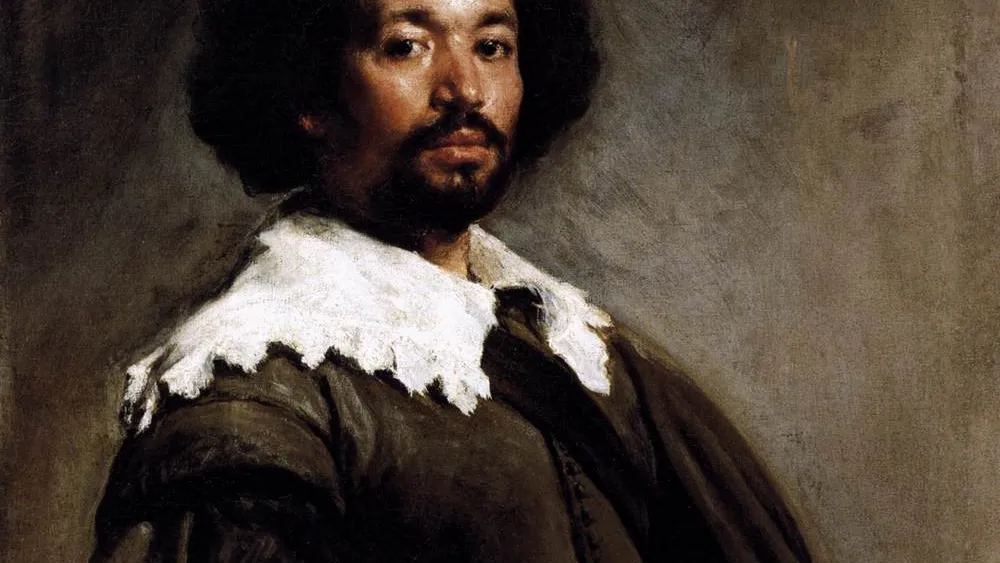
Juan de Pareja was born into slavery in southern Spain around 1610. He worked in the studio of the great painter Diego Velázquez. In Rome, in 1650, Velázquez painted his portrait, which was exhibited at the Pantheon on March 19 of the same year. On November 23, 1650, he granted him a letter of manumission, effective four years later. Pareja then became an independent painter in Madrid. In his The Calling of Saint Matthew (1661), held at the Prado Museum, he depicted himself on the left side of the painting.
The portrait painted by Velázquez had an astonishing fate. In 1801, during a sale at Christie's, the catalog described it as the "portrait of a Moorish slave, who was in his service and became a great painter," without naming him. On November 27, 1970, it was sold at Christie's in London for 2,310,000 pounds sterling: it was the first painting sold for over a million pounds at auction. It is now at the Metropolitan Museum of Art in New York, which dedicated an exhibition in 2023 to "Juan de Pareja, Afro-Hispanic Painter."
General Dumas, the vanished statue
Thomas-Alexandre Dumas was born on March 25, 1762, in Saint-Domingue, present-day Haiti. He was the son of a French nobleman, the Marquis Alexandre Antoine Davy de la Pailleterie, and Marie-Cessette Dumas, a woman of African descent whom he held in slavery. Taken to France by his father in 1776, he enlisted in 1786 as a simple soldier in a dragoon regiment. He became the first Black man in the French army to reach the ranks of brigadier general, divisional general, and then general-in-chief. He is the father of the writer Alexandre Dumas.
A statue of General Dumas was installed in Paris, at Place Malesherbes, in 1913, following a subscription supported notably by Anatole France and Sarah Bernhardt. It was destroyed during the winter of 1941-1942. In 2009, a sculpture in his honor, the work of Driss Sans-Arcidet, was installed in the same square, which had become Place du Général-Catroux.
Cleopatra, from currency to cinema
Cleopatra VII belonged to the Ptolemaic dynasty, founded by Ptolemy I, a Macedonian Greek general and companion of Alexander the Great. Historians do not know the identity of her mother with certainty. As the only Ptolemaic queen to issue coins in her own name, she appears on them with distinct features, very different from the smoother and undoubtedly idealized sculpted portraits. In the 20th century, Hollywood gave her the faces of Theda Bara (1917), Claudette Colbert (1934), and Elizabeth Taylor (1963).
Exodus, "whitewashing" in cinema
In 2014, the film Exodus: Gods and Kings, directed by Ridley Scott, cast four white actors in the lead roles of Hebrews and Egyptians, including that of Ramesses II. The film was accused of "whitewashing," that is, casting white actors in roles of characters who were not white. It was banned in Egypt and the United Arab Emirates for "historical inaccuracies."
Our perspective
These stories do not tell of a conspiracy, but of a habit: every era paints the past with its own eyes. Giving a name, a face, and a history back to those who have been erased is about making history fairer for everyone. And you, which face of African history deserves to finally be shown as it truly was?
This article was written in French with the help of artificial intelligence from the sources cited below, then translated from French automatically. Read the original.