Cachupa, Cape Verde's national dish: the story of an archipelago in a pot, and its recipe
On Saturday mornings in Praia, the capital of Cape Verde, steaming pots line the streets. Inside: corn, beans, vegetables, and meat or fish—cachupa, the archipelago's national dish. A recipe that seems simple on the surface, yet tells the entire history of the islands.
A stew of corn and beans
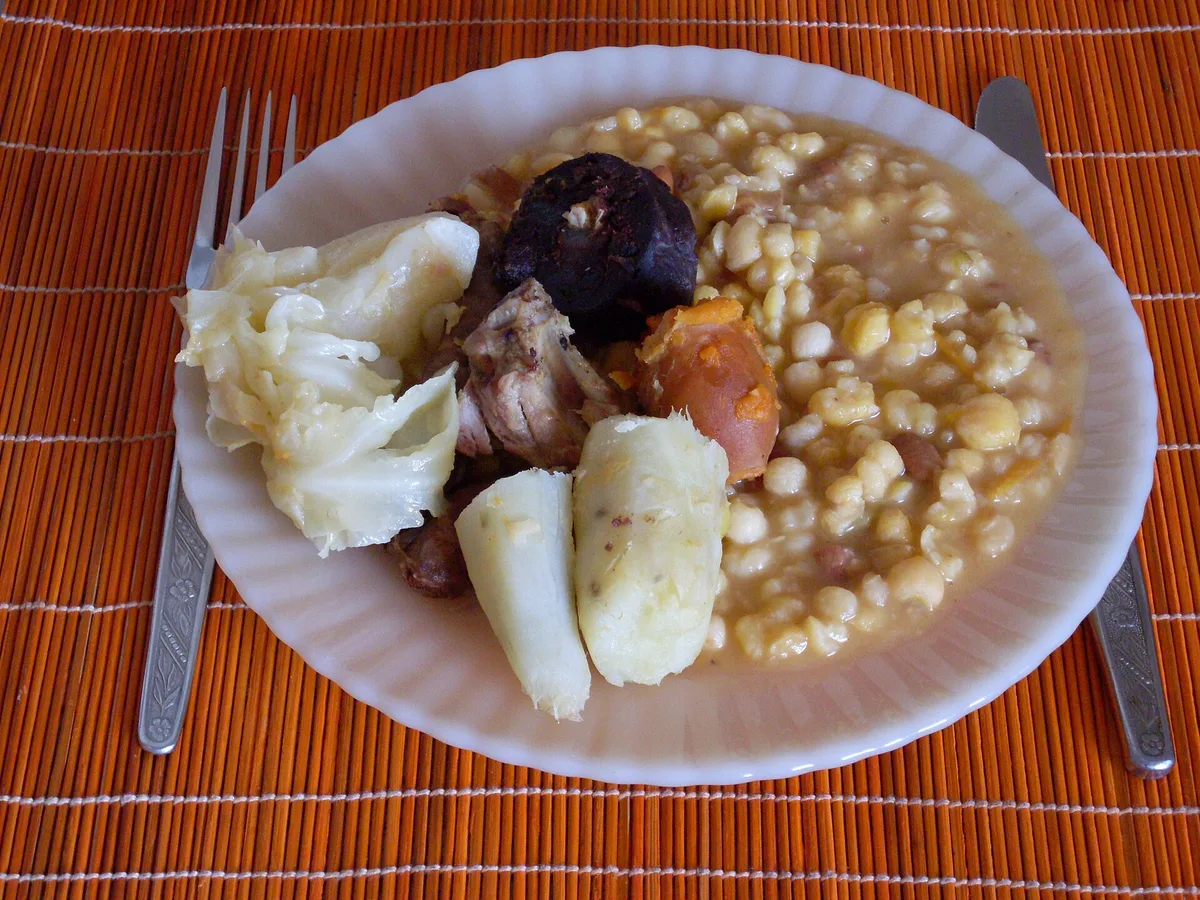
Cachupa is a stew of corn (dried white corn, similar to hominy) and beans, slow-cooked with fish or meat: sausage, pork, beef, goat, or chicken, and often blood sausage. Corn and beans are the bedrock of Cape Verdean cuisine. Every island has its own version of the dish. "If cachupa is the queen of Cape Verdean gastronomy, corn is king," summarized the Portuguese news agency Lusa in a 2024 report. A cook in Praia, when asked if cachupa could be made with spaghetti instead of corn, burst out laughing: "Cachupa without corn? No, no, no."
Islands at the crossroads of the Atlantic
The islands of Cape Verde were uninhabited before the arrival of European navigators around 1456. In 1462, Portuguese settlers settled on the island of Santiago and founded Ribeira Grande, known today as Cidade Velha. In the 16th and 17th centuries, the archipelago played a major role in the transatlantic slave trade. Today's Cape Verdeans descend from Africans, both free and enslaved, and Europeans of various origins. Their West African cuisine also bears strong Portuguese influences.
Corn against hunger
Rain is rare in Cape Verde: less than 2% of the land is arable. Starting in 1747, the archipelago was struck by droughts and famines that recurred on average every five years. In the 18th and 19th centuries, three major droughts claimed over 100,000 lives. In 1941–1943 and 1947–1948, two of the worst famines in the country's history killed around 45,000 people. Through these trials, corn remained, according to Lusa, "the historical foundation of the Cape Verdean diet."
Pobre or rica
There are two main ways to make cachupa. Cachupa pobre, the "poor" version, is prepared with fish. Cachupa rica, the "rich" version, is more hearty and combines several meats. Depending on the island, vegetables are added: cabbage, carrot, squash, sweet potato, cassava, or plantain.
A whole morning of cooking
Preparing cachupa requires patience. According to Lusa, it takes an entire morning: the corn takes a long time to cook, and each ingredient must be added at just the right moment. On Saturdays in Praia, cooks—mostly women, along with some men—set up their pots along the roadside; each pot can serve 40 to 50 plates. Recipes are passed down from mother to daughter, and every family guards its own secret.
The next day: cachupa frita
Nothing goes to waste. The previous day's leftovers are pan-fried, often with onions: this is cachupa frita, also called refogada or guisada. It is eaten for breakfast, topped with a fried egg and sausage, or alongside fried fish.
A world record
In 2017, during the ninth Badja ku Sol festival in Praia, Cape Verde entered the Guinness World Records with the world's largest cachupa. It contained over 600 kg of corn, 100 kg of chicken, 300 kg of pork, and vast amounts of beans and vegetables, reaching a total weight of 6,360 kg. It was served to more than 30,000 people.
A dish that travels
The Cape Verdean diaspora, living notably in the United States and Portugal, far outnumbers the population of the islands. They too, a Praia restaurateur told Lusa, keep up the tradition of cooking cachupa on Saturdays. Cachupa has also become one of the most popular dishes in São Tomé and Príncipe, where it was likely brought from Cape Verde. In 2013, the Cape Verdean singer Carmen Souza dedicated an album to it, titled Kachupada.
The cachupa recipe
This traditional recipe, for a large pot, is adapted from the one published by the Massachusetts WIC Nutrition Program (Brockton team). Quantities have been converted to rounded metric measurements.
Ingredients: 500 g dried white corn; 350 g dried Lima beans; 450 g pork loin; 450 g pork shoulder; 450 g chopped green cabbage (or collard greens); 450 g sliced winter squash, skin-on, seeded; 450 g peeled, sliced sweet potato; 1 large tomato, chopped; ½ bunch fresh cilantro, chopped; 1 large onion, chopped; 4 to 5 bay leaves, crumbled; 5 to 6 garlic cloves, minced; 85 g tomato paste; 2 tablespoons sea salt; 6 cl olive oil; 1 small bag frozen Lima beans.
1. The night before, soak the dried corn and dried beans together in a large pot filled with water. 2. The next day, drain and rinse them. Refill the pot almost to the top with fresh water, add the corn and beans, and cook over medium heat at a gentle simmer for 2 hours. 3. Cut the raw meat into chunks and add it to the pot. Add all the vegetables, seasonings, and olive oil. 4. Simmer for about another hour, until the meat and vegetables are tender. Serve hot.
The next day, cachupa frita: lightly brown a large chopped onion in olive oil, add about a liter of leftover cachupa, and sauté until the liquid evaporates and the mixture turns crispy. Serve with fried eggs.
Our take
Cachupa tells the story of a people who learned to do a lot with a little, and to share. Born from the corn of hard years, this dish became a Saturday celebration, from the streets of Praia to kitchens across the diaspora. What dish from your childhood deserves a place in history?
This article was written in French with the help of artificial intelligence from the sources cited below, then translated from French automatically. Read the original.
Sources
- Guinness World Records : World's largest cachupa stew made in Cape Verde (17 octobre 2017)
- RTP / Lusa : Cachupa à solta pelas ruas de Cabo Verde, todos os fins-de-semana (2024)
- Massachusetts WIC (Brockton) : recette de la cachupa
- Wikipédia (anglais) : Cachupa
- Wikipédia (anglais) : Cape Verdean cuisine
- Wikipédia (anglais) : History of Cape Verde
- Wikipédia (anglais) : Cape Verde