November 2, 1930: Haile Selassie crowned in Addis Ababa, colonial powers bow down
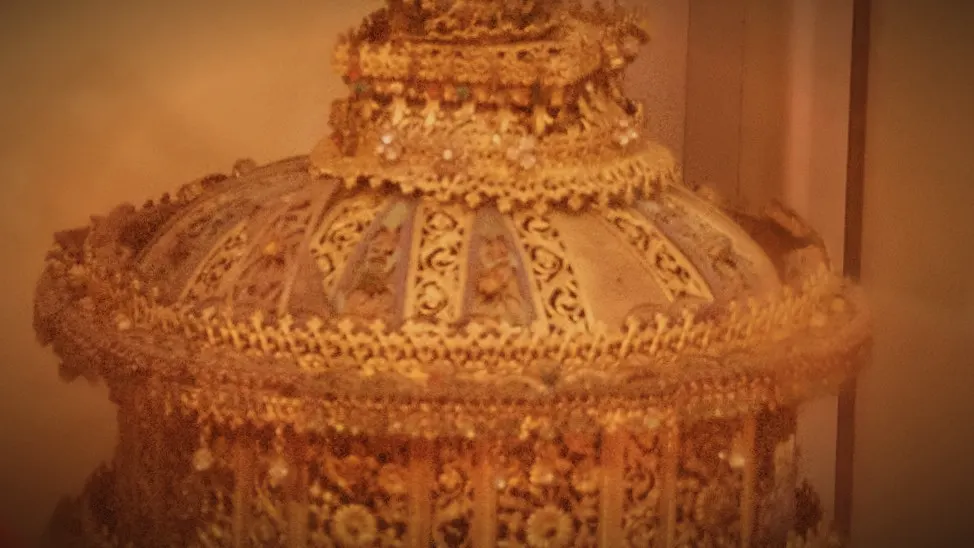
On November 2, 1930, in St. George's Cathedral in Addis Ababa, Tafari Makonnen was crowned 'King of Kings of Ethiopia' under the name Haile Selassie I. Before him paraded the envoys of the European powers who had divided Africa among themselves without asking for the opinion of Africans. Negus—king—since October 1928, he ascended the imperial throne after the sudden death of his aunt, Empress Zewditu, on April 2, 1930.
The masters of colonial Africa received by an African sovereign
The protocol said it all. The Duke of Gloucester, son of King George V, represented the United Kingdom; Marshal Franchet d'Espèrey represented France; the Prince of Udine represented King Victor Emmanuel III of Italy; Washington sent Herman Murray Jacoby, personal emissary of President Herbert Hoover. The British writer Evelyn Waugh attended the ceremony.
For Ethiopia was not a territory like the others: it was the only African state to have held off European conquest. Seeing the colonial chancelleries bow down in an African capital was to see the world's hierarchy inverted for a day.
From Kingston to Geneva, a symbol greater than the man
The shockwave was global. In Jamaica, preachers—foremost among them Leonard Howell—saw in this coronation the fulfillment of a biblical prophecy: the Rastafari movement was born in the 1930s, nourished by Ethiopianism and the return to Africa advocated by Marcus Garvey. Its name comes from the title he held before 1930: Ras Tafari. Britannica notes that 'many, but not all' Rastas see him as the returned Christ; the man himself, in 1967, called himself 'a man' and 'mortal'.
Mussolini invaded Ethiopia in October 1935; exiled to England in May 1936, the Emperor launched his famous appeal for collective security at the League of Nations podium at the end of June. Reinstated in May 1941, he made Addis Ababa the headquarters of the Organization of African Unity in 1963 and served as its first president.
A reign that historians do not celebrate as a whole
The symbol is not the record. To join the League of Nations in 1923, Haile Selassie had promised to eradicate slavery: abolition would not be decreed until 1942, even though there were still about two million slaves in the early 1930s. The 1955 Constitution reaffirmed his absolute power, and his administration is judged 'autocratic and illiberal,' notably by Human Rights Watch.
The Wollo famine in the early 1970s, concealed by officials, precipitated his fall; accounts differ on what the Emperor knew about it. Deposed on September 12, 1974, by the Derg military, he was killed on August 27, 1975, at the Jubilee Palace, an assassination revealed to the public in 1994.
Key takeaways
On November 2, 1930, Africa saw the colonial powers bow down in an Addis Ababa cathedral, and this day became a symbol for the entire Black world. Forty-four years later, the Ethiopians themselves overthrew their emperor.
This article was written in French with the help of artificial intelligence from the sources cited below, then translated from French automatically. Read the original.