"The pyramids were built by slaves": true or false? Not so simple
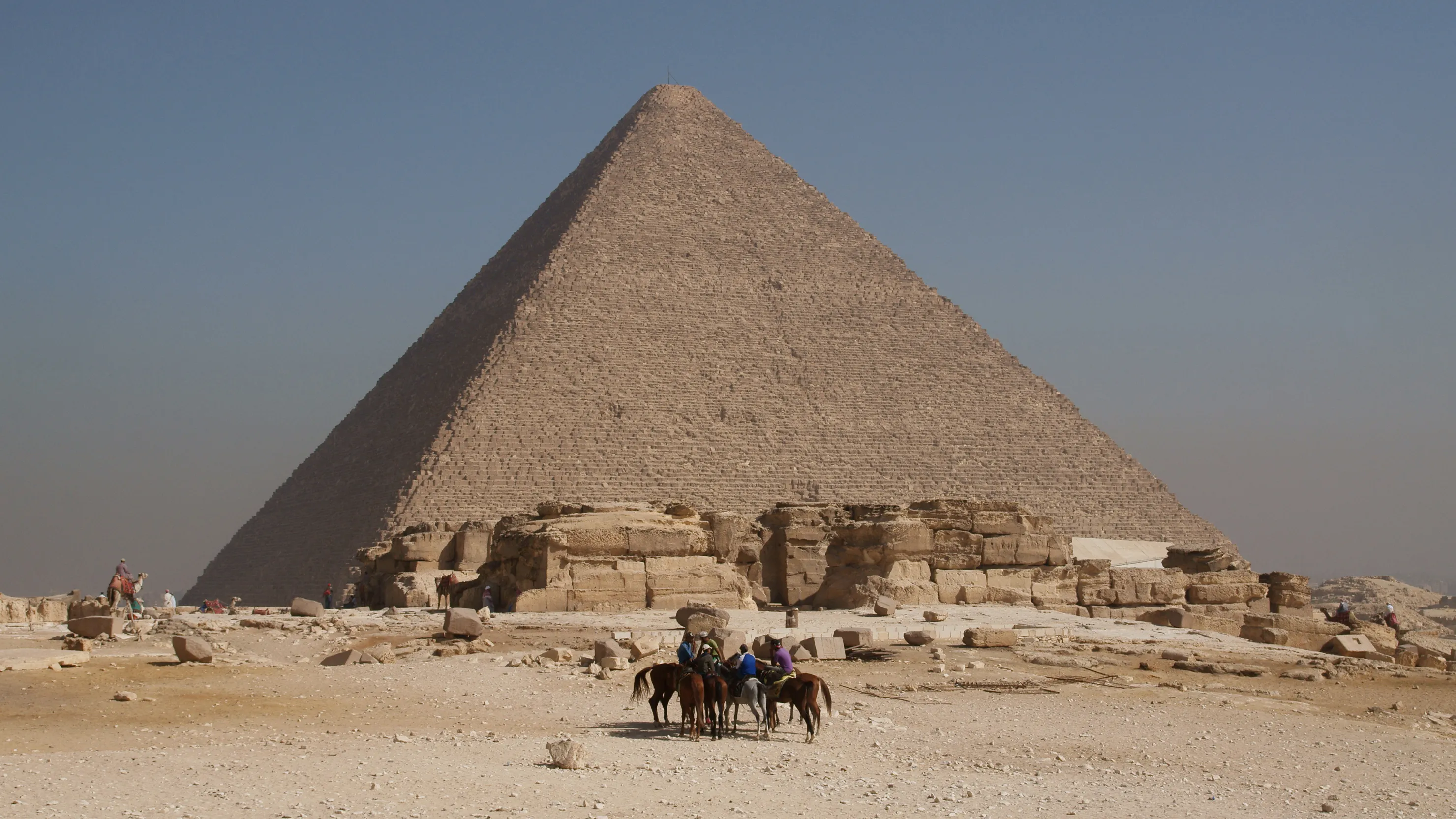
This is one of the most widespread ideas about ancient Egypt: that the pyramids were built by crowds of slaves under the lash. Archaeological discoveries from recent decades tell a much more nuanced story. Here are seven elements, with sources to support them.
1. An idea from the Greeks
The Great Pyramid of Giza, the tomb of Pharaoh Khufu, was built around 2600 BC, in about 26 years. The first accounts of its construction are much later: those of the Greek historian Herodotus in the 5th century BC, then Diodorus Siculus in the 1st century BC. Herodotus claims that the construction lasted 20 years and mobilized 100,000 men, replaced every three months. The Greeks, many centuries after the events, believed that the pyramids had been built by slaves.
2. The workers' cemetery
In 1990, Egyptian archaeologist Zahi Hawass discovered a workers' cemetery south of Giza, beyond the "Wall of the Crow," which was used at least from the reign of Khufu until the end of the 5th Dynasty. For archaeologists, these tombs are among the clues showing that the Great Pyramid was built by tens of thousands of skilled workers, settled near the construction site.
3. Organized teams
Graffiti left by workers at Giza shows how they were organized: the haulers formed groups of 40 men, divided into four subgroups each led by a "chief of ten." Inside the Great Pyramid itself, team graffiti mentions the name of Khufu. To move heavy loads, the Egyptians pulled sleds: a painting from the tomb of Djehutihotep, which is much later, shows 172 men pulling a colossal statue.
4. The Diary of Merer
In 2013, a French mission led by Pierre Tallet and Gregory Marouard discovered papyri over 4,500 years old at Wadi al-Jarf, on the shores of the Red Sea: these are the oldest known written papyri. They contain the logbook of Merer, an inspector who led about forty boatmen. For several months in the 27th year of Khufu's reign, his team transported limestone blocks from the Tura quarries to Giza, probably for the casing of the Great Pyramid. The diary also gives the ancient name of the pyramid: Akhet-Khufu, "the horizon of Khufu."
5. Paid or conscripted
According to archaeologists, the builders worked for a wage or as part of a labor tax, the corvée. The corvée is forced and unpaid labor, but intermittent, limited to a certain period of the year. In Egypt, it was used for major state projects from the 4th Dynasty, that of Khufu, and existed until the 19th century: the Suez Canal was still partly dug in this way.
6. An extraordinary construction site
The Great Pyramid is made of about 2.3 million blocks, for a total weight of 6 million tons. It was originally 146.6 meters high and was the tallest human-made structure in the world for more than 3,700 years. A construction management study conducted in 1999 with Egyptologist Mark Lehner estimates that it required an average of 13,200 workers, and up to 40,000 at the peak of the work.
7. Slavery did exist
Ancient Egypt experienced several forms of servitude: slavery, debt bondage, and forced labor. Prisoners of war were used by force, and families could be sentenced to life labor. But for the Great Pyramid, modern discoveries point primarily to recruited workers and laborers subject to the corvée.
Verdict: NOT SO SIMPLE
The pyramids were not built by crowds of chained slaves, as films often show. But their builders were not all volunteers: thousands of skilled, paid workers and laborers subject to the corvée, organized into teams, carried out one of the greatest construction projects in history.
Our perspective
Behind every pyramid, there are thousands of Egyptians whose team names, tombs, and even logbooks we find today. And you, were you taught that the pyramids were built by slaves?
This article was written in French with the help of artificial intelligence from the sources cited below, then translated from French automatically. Read the original.