Wangari Maathai: From Seven Trees to the Nobel Prize, the Woman Power Could Never Break
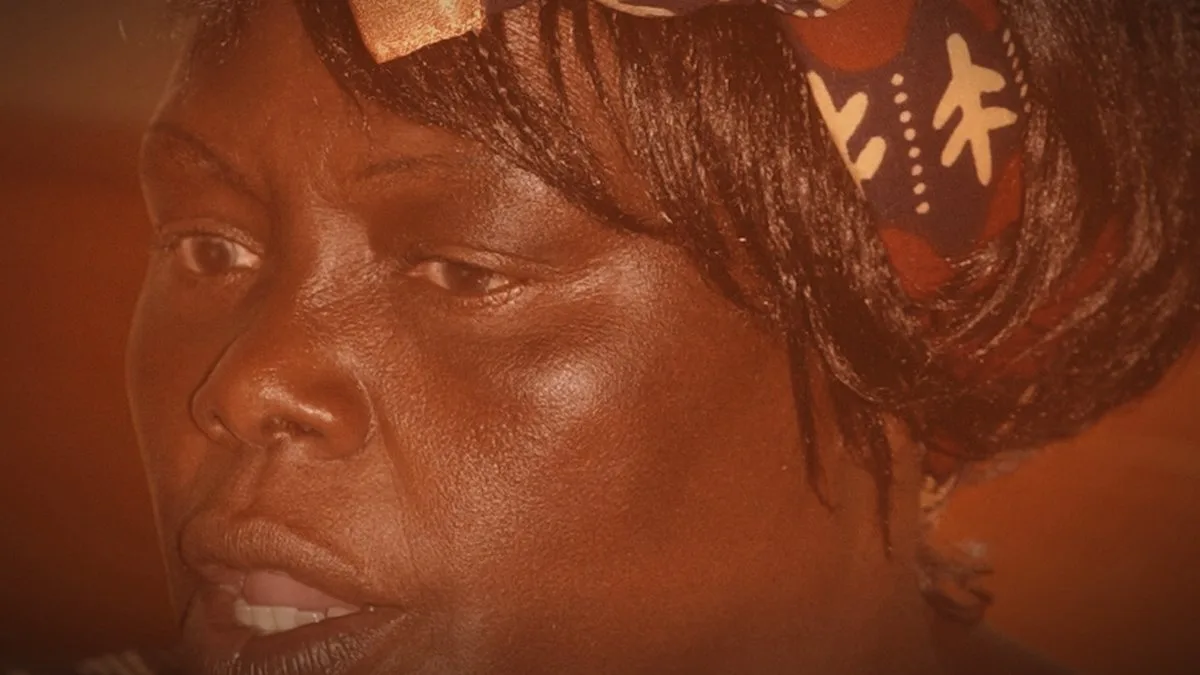
She was born in a village in the British colony of Kenya. She died in 2011 as a scientist with a doctorate from the University of Nairobi, a former member of parliament, the first African woman to win the Nobel Peace Prize, and the founder of a movement that planted 51 million trees. In between, Wangari Maathai was mocked, imprisoned, beaten by police, and insulted by the head of state. This is the story of a woman who proved that a simple act—planting a tree—could shake a regime.
A childhood by a stream
Wangari Muta was born on April 1, 1940, in Ihithe, a Kikuyu village in the central highlands of Kenya, in the Nyeri region. Around 1943, her family moved to the Rift Valley, near Nakuru, to a British settler's farm where her father had found work. There was no school on the estate; at the end of 1947, the young girl returned to the village with her mother and joined her brothers at the Ihithe primary school at the age of eight.
From those years, she would keep an image that she shared with the whole world on the day of her Nobel Prize. She used to fetch water for her mother from a stream near their home. She would drink the clear water directly and try to catch the strings of frog eggs, which she mistook for pearls. Fifty years later, she told the audience in Oslo, the stream had disappeared, and women were walking for miles to find water. Her entire struggle is rooted in that memory.
At eleven, she entered St. Cecilia boarding school at the Catholic mission in Mathari, Nyeri. There, she learned English and converted to Catholicism. During those years, Kenya was set ablaze by the Mau Mau uprising against colonization, and her mother had to leave her home for an 'emergency village' created by colonial authorities. In 1956, Wangari graduated at the top of her class and entered Loreto High School in Limuru, the only Catholic high school for girls in the country.
1960: The flight that changed everything
As independence approached, Kenyan leader Tom Mboya organized an airlift with American partners to send the country's best students to study in the United States. In September 1960, Wangari was among the approximately 300 young Kenyans selected. She earned a bachelor's degree in biology in 1964 from Mount St. Scholastica College in Kansas, followed by a master's degree from the University of Pittsburgh in January 1966.
Returning home was brutal. A research assistant position awaited her at the University of Nairobi. But the day she showed up, she was told it had been given to someone else. She saw this as a sign of double discrimination: because she was a woman and because of her ethnicity. After two months of searching, a German professor, Reinhold Hofmann, hired her in veterinary anatomy. She continued her studies in Germany, in Giessen and Munich, then defended her thesis in Nairobi in 1971. She became the first woman in East and Central Africa to earn a doctorate.
Her profession: A scientist before an activist
It is often forgotten that Wangari Maathai was first and foremost a researcher and teacher. A specialist in animal anatomy, she became a lecturer in 1975, head of the veterinary anatomy department in 1976, and then an associate professor in 1977. Each time, she was the first woman in the region to hold the position. At the university, she was already fighting for female staff to have the same benefits as men. The court rejected her request, but most of her demands were eventually met.
In parallel, she was involved everywhere: she led the Nairobi branch of the Kenyan Red Cross in 1973, chaired a center that acted as a liaison between associations and the United Nations Environment Programme based in Nairobi, and joined the National Council of Women of Kenya, which she would chair from 1981 to 1987.
The turning point: Sick land, exhausted women
It was in the field that she understood. Rural women told her they lacked firewood for cooking, clean water, varied food, and income. She made the connection: forests had been cut down, soils were becoming depleted, and export crops had replaced food crops. For her, the root of most of Kenya's problems was the destruction of nature.
Her first attempt was a failure. In 1974, she created a small company, Envirocare, to have trees planted by the unemployed. Lacking funds, the company disappeared. But the idea remained. After a major United Nations conference in 1976, she convinced the National Council of Women to take the plunge. On June 5, 1977, World Environment Day, a procession left the center of Nairobi for Kamukunji Park. They planted seven trees in honor of historical figures from Kenyan communities. The Green Belt Movement was born.
The method was brilliantly simple. Women would go into nearby forests to find seeds of native trees, grow them in nurseries, and receive a small sum for each young tree planted. They gained income, wood, shade, water, and above all, power over their own lives.
The price of a free woman
Her private life was difficult. In May 1969, she married Mwangi Mathai, a Kenyan she met upon her return from the United States, who would become a member of parliament. They had three children: Waweru, Wanjira, and Muta. The couple separated in 1977. According to accounts of the divorce, her husband judged her 'too strong-willed for a woman.' After the judgment, she criticized the judge in an interview: she was convicted of contempt and spent three days in the Lang'ata women's prison in Nairobi.
Then, her ex-husband's lawyer demanded that she give up her name. Her response became famous: instead of changing her name, she added an 'a.' Mathai became Maathai.
Alone against the power
In 1989, she learned that the ruling party wanted to build a 60-story tower in the heart of Uhuru Park, the great green lung of Nairobi. She wrote to the authorities, took the matter to court, and alerted the foreign press. The government responded with contempt: through the press, they called her 'mad,' and members of parliament labeled her movement a 'bogus organization.' But in January 1990, foreign investors backed out. The tower was never built.
On February 28, 1992, she joined mothers of political prisoners on a hunger strike in a corner of Uhuru Park. They named the place 'Freedom Corner.' On March 3, the police charged. Wangari Maathai lost consciousness from the blows and ended up in the hospital. President Daniel arap Moi publicly called her 'mad' and a threat to the country's order and security. The United States expressed deep concern.
Nothing stopped her. On January 8, 1999, she went to the Karura Forest, on the outskirts of Nairobi, which the government wanted to hand over to allies to build, among other things, a golf course. As she tried to plant a tree there, her group was attacked: she was injured, as were several members of parliament and journalists. For her, the tree had become a political weapon.
From prison to the Nobel Prize
In 2002, the tide turned. She was elected member of parliament for the Tetu constituency, her home, with 98% of the vote. In January 2003, she became Assistant Minister for the Environment. On October 8, 2004, the Norwegian Nobel Committee awarded her the Nobel Peace Prize 'for her contribution to sustainable development, democracy, and peace.' She was the first African woman to receive it.
The recognition did not stop there. In March 2005, she became the first president of the African Union's Economic, Social and Cultural Council and an ambassador for the protection of the Congo Basin forests. In 2006, she was one of the eight personalities who carried the Olympic flag at the opening of the Turin Winter Games.
What she believed
A Catholic since adolescence, Wangari Maathai never turned her back on the Kikuyu culture of her childhood. In her Nobel Prize speech, she recalled that Kikuyu elders carried a staff carved from the thigi tree: placed between two camps that were arguing, it forced them to stop fighting and seek reconciliation. For her, culture was perhaps the 'missing link' in Africa's development.
She called on Africans to rediscover the best of their cultures to regain their identity and self-confidence, while rejecting traditions that caused harm, such as female genital mutilation. She also rejected the idea, which her people had been led to believe, that the poor lack knowledge and that solutions must always come from the outside. Her central conviction: one cannot separate the protection of the land, democracy, and peace. She dedicated a book to this in 2010, 'Replenishing the Earth,' on the spiritual values necessary to heal the planet and ourselves.
What she leaves us
Wangari Maathai died on September 25, 2011, in Nairobi, at the age of 71, from cancer. Her ashes rest in Nairobi at the institute for peace and the environment that bears her name. She leaves behind several books, including her memoirs, 'Unbowed,' and 'The Challenge for Africa.' The Green Belt Movement now claims 51 million trees planted in Kenya, and her daughter Wanjira continues the fight.
Our perspective
The story of Wangari Maathai says something profound about Africa. A village girl, educated in the colony's schools, understood before many others that our lands, our forests, and our rivers are the continent's primary wealth, and that defending them is defending freedom. She was humiliated and beaten at home before being celebrated in Oslo. Her life poses a question that concerns us all: how many more African heroes will we have to wait for the world to recognize before we honor them ourselves?
This article was written in French with the help of artificial intelligence from the sources cited below, then translated from French automatically. Read the original.
Sources
- Comité Nobel norvégien : biographie de Wangari Maathai
- Comité Nobel norvégien : discours du prix Nobel, Oslo, 10 décembre 2004
- Comité Nobel norvégien : annonce du prix 2004
- Green Belt Movement : le mouvement qu'elle a fondé
- Nation Africa : « Unbowed Maathai stood against Moi and won »
- Wikipédia (anglais) : Wangarĩ Maathai
- Wikipédia (français) : Wangari Muta Maathai