Who wrote our history? How Africa took back the pen with UNESCO
Who decides what we know about Africa? For centuries, its history was primarily told from the outside. In the wake of independence, Africans decided to take back the pen. Here is how.
"No writing, no history"?
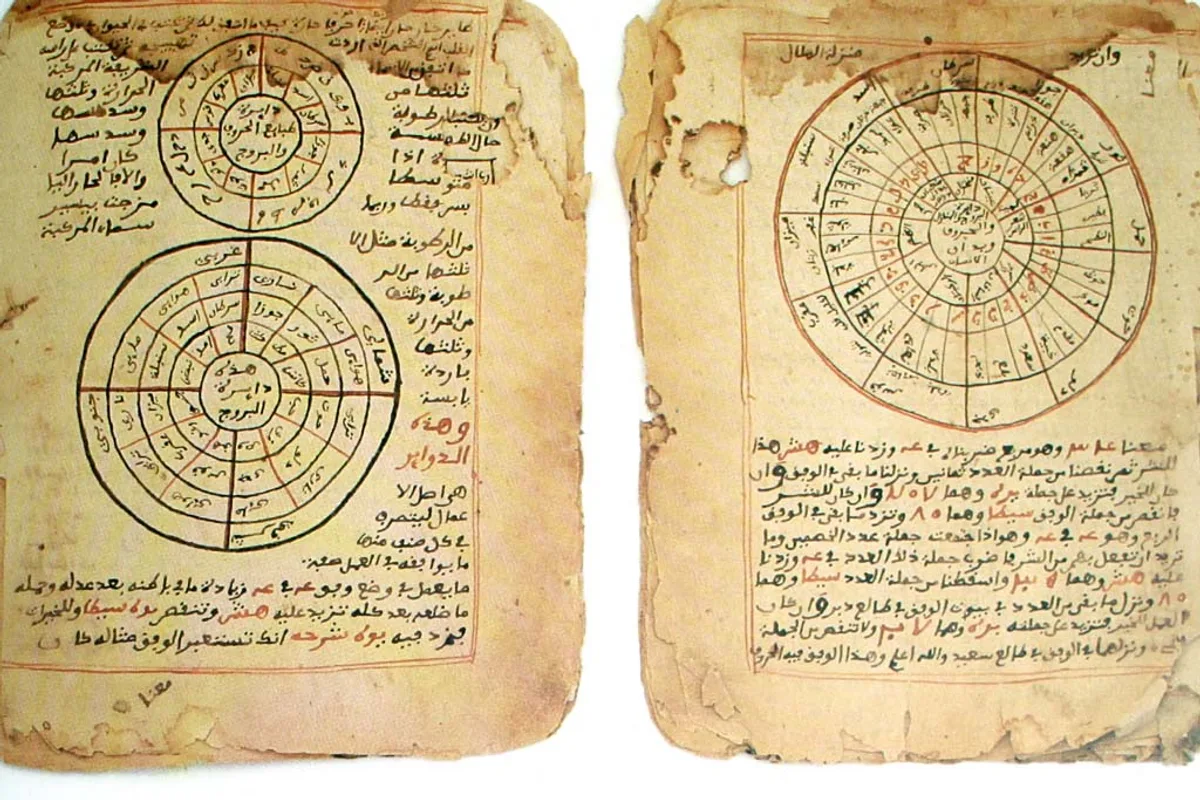
A long-held idea dominated: that for lack of written sources, it would be difficult to study Africa's past seriously. Combating this misconception was precisely one of the objectives of the UNESCO project. It ignored, moreover, written treasures like the Timbuktu manuscripts, preserved for centuries in the city's families, which cover sciences such as astronomy, medicine, and philosophy.
1964: The choice of African states
In 1964, the UNESCO General Conference launched the General History of Africa. It was a request from newly independent African states: they wanted to reclaim their cultural identity, correct the ignorance surrounding their continent's history, and free themselves from prejudice. The goal, according to the project, was to "reclaim the interpretation and writing of African histories" and to show the contribution of African cultures to the history of humanity.
350 experts, 35 years of work
The first phase lasted from 1964 to 1999. It brought together 350 experts from Africa and the rest of the world under the responsibility of an international scientific committee. Eight volumes were published, covering three million years of African history, from methodology and prehistory to Africa since 1935.
African scholars at the helm
The project brought together great African scholars: the Burkinabe historian Joseph Ki-Zerbo, trained at the Sorbonne, who directed the first volume dedicated to methodology and prehistory; the Senegalese Cheikh Anta Diop; Théophile Obenga, Ali Mazrui, Gamal Mokhtar, and Bethwell Ogot. Non-African researchers, such as Jan Vansina and Philip Curtin, also participated. In 1972, Joseph Ki-Zerbo had published "Histoire de l'Afrique noire," which became a reference work.
The words of the elders as a source
A major innovation: history was written using African sources, such as oral traditions, arts, and languages. Field missions were conducted to collect oral traditions, and regional documentation centers were created. Throughout West Africa, griots have for centuries been the guardians of this memory, passed down from generation to generation.
A scattered memory
To gather sources, UNESCO also collected unpublished manuscripts in Arabic and Ajami—that is, African languages written with the Arabic alphabet—and drew up archive inventories. A "Guide to the Sources of African History," drawn from archives and libraries in several European and Asian countries, was published in nine volumes: a significant part of the continent's written memory is kept outside of Africa.
A history translated and transmitted
The General History of Africa was published in English, French, and Arabic, with an abridged version in Kiswahili, Hausa, and Fulfulde. Since 2009, a second phase has aimed to develop curricula and tools for schools from it. In 2025, three new volumes were released: the revisited General History of Africa, Africa and its diasporas, and today's global Africa.
Our perspective
The General History of Africa is a treasure that too few people have opened. It proves that Africa has a long, rich, and documented history, and that its own children know how to write it. One question remains, which belongs to you: who should write the history of Africa today?
This article was written in French with the help of artificial intelligence from the sources cited below, then translated from French automatically. Read the original.